
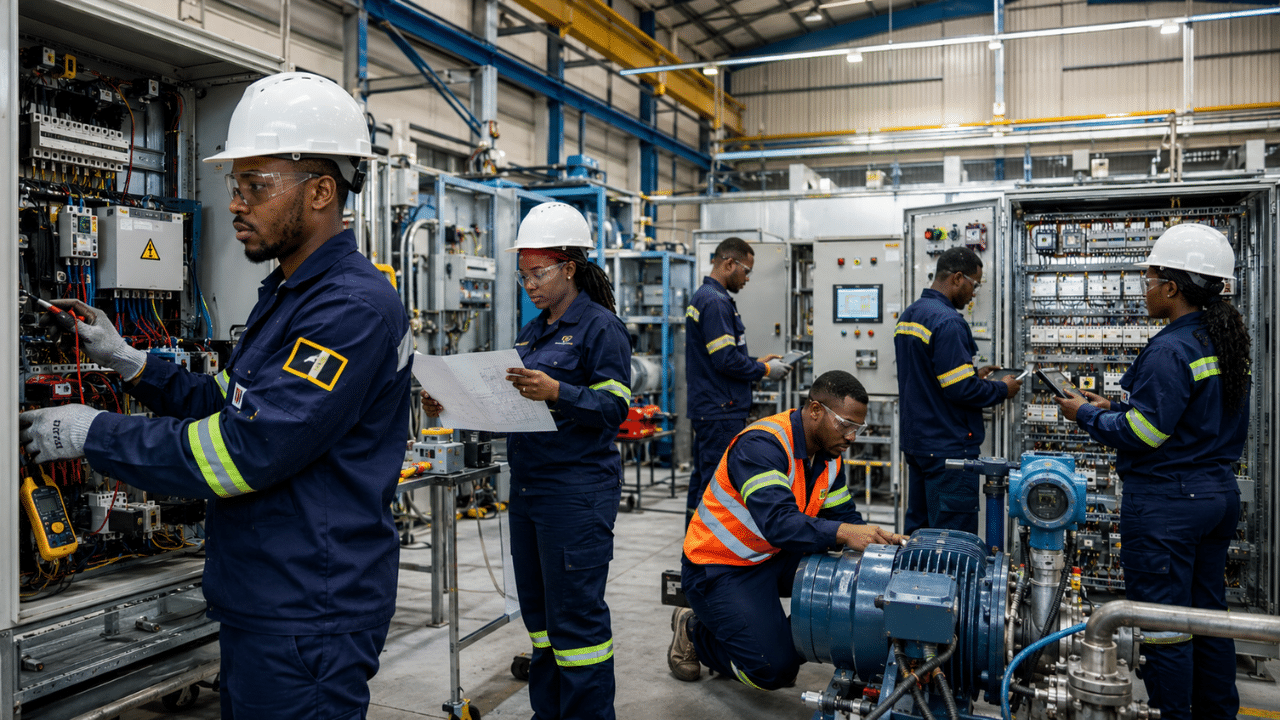
Every time a factory starts production, a mine powers its operations, or a city switches on its lights, skilled electrical professionals are working behind the scenes to keep critical systems running.
South Africa’s economy depends heavily on electricians, instrumentation technicians, automation specialists, electrical assistants and maintenance teams responsible for installing, maintaining and troubleshooting electrical infrastructure. From power stations and manufacturing plants to renewable energy facilities and mining operations, electrical trades remain among the country’s most important technical occupations.
While many people associate engineering careers with university degrees, thousands of successful electrical professionals begin their journeys through apprenticeships, learnerships, workplace training programmes and artisan development initiatives.
As industries increasingly adopt automation, smart technology and renewable energy solutions, demand for skilled electrical artisans continues to grow across multiple sectors.
This guide explores everything you need to know about Electrical Trades and Assistants in South Africa, including career pathways, apprenticeship opportunities, salaries, qualifications, trade tests and long-term career prospects.
What Are Electrical Trades?
Electrical trades involve the installation, maintenance, repair, testing and operation of electrical systems and equipment.
Electrical professionals work with:
- Power distribution systems
- Electrical wiring
- Industrial control systems
- Motors and drives
- Automation equipment
- Instrumentation systems
- Renewable energy installations
- Manufacturing equipment
Electrical trades are essential across:
- Mining
- Manufacturing
- Construction
- Energy Generation
- Renewable Energy
- Utilities
- Transportation
- Telecommunications
Electrical professionals operate within strict safety regulations designed to protect workers, equipment and the public.
Popular Electrical Trades in South Africa
Electrician
Electricians install, maintain and repair electrical systems in residential, commercial and industrial environments.
Responsibilities often include:
- Electrical installations
- Fault finding
- Cable termination
- Switchgear maintenance
- Power distribution systems
- Compliance inspections
Electricians remain among South Africa’s most sought-after artisans.
Industrial Electrician
Industrial Electricians specialise in large-scale electrical systems used in factories, mines and processing plants.
They commonly work with:
- High-voltage equipment
- Industrial motors
- Transformers
- Manufacturing systems
- Automated production lines
Instrumentation Technician
Instrumentation professionals maintain and calibrate equipment used to monitor and control industrial processes.
Examples include:
- Pressure sensors
- Flow meters
- Temperature systems
- Process control equipment
- Industrial monitoring systems
Instrumentation is particularly important within mining, petrochemical and manufacturing industries.
Automation Technician
Automation specialists focus on systems that automatically control industrial operations.
These systems often include:
- PLCs
- SCADA Systems
- Robotics
- Automated production equipment
- Smart manufacturing technologies
As Industry 4.0 continues to expand, automation careers are becoming increasingly valuable.
Electrical Assistant
Electrical Assistants support qualified electricians and technicians in daily operations.
Typical duties include:
- Assisting with installations
- Carrying tools and materials
- Site preparation
- Basic maintenance support
- Equipment inspections
These roles often provide valuable workplace exposure for individuals pursuing future apprenticeships.
Why Electrical Trades Remain in Demand
Electrical systems power almost every industry in South Africa.
Demand continues to be driven by:
- Infrastructure development
- Manufacturing growth
- Mining operations
- Renewable energy projects
- Electrical maintenance requirements
- Industrial automation
Major employers frequently recruiting electrical professionals include:
- Eskom
- Transnet
- Sasol
- Exxaro
- Komatsu
- Bell Equipment
- Anglo American
- South32
- ArcelorMittal
- Various renewable energy developers
- You can also check CareersPursuit
The growth of solar, wind and battery energy projects is creating additional opportunities for qualified electrical professionals.
How to Become an Electrician in South Africa
Step 1: Complete Your School Education
Most apprenticeship programmes require:
- Grade 12
- Mathematics
- Physical Science
Strong performance in technical subjects can improve your chances of securing training opportunities.
Step 2: Attend a TVET College
Many aspiring electricians complete:
- N1–N6 Electrical Engineering
- NC(V) Electrical Programmes
- Occupational Qualifications
These programmes provide theoretical knowledge required for electrical careers.
Step 3: Secure an Apprenticeship
Electrical apprenticeships combine:
- Workplace Training
- Practical Experience
- Classroom Learning
- Industry Assessments
Many electrical apprenticeship and learnership programmes are supported through the Energy and Water Sector Education and Training Authority (EWSETA), which plays a key role in developing electrical skills within South Africa.
Step 4: Complete Workplace Training
Apprentices gain practical experience while working alongside qualified artisans and technicians.
This phase focuses heavily on:
- Safety procedures
- Electrical installations
- Fault finding
- Equipment maintenance
- Industry standards
Step 5: Pass the Trade Test
Before qualifying as an electrician, apprentices must successfully complete a Trade Test.
Occupational qualifications are overseen by the Quality Council for Trades and Occupations (QCTO), while national artisan certification and trade testing systems are supported through the National Artisan Moderation Body (NAMB).
Electrical Safety and Industry Standards
Electrical work is governed by strict safety regulations because mistakes can result in severe injury, equipment damage or loss of life.
Many employers require compliance with standards supported by organisations such as:
- Electrical Contractors’ Association of South Africa (ECA(SA))
- Electrical Conformance Board (ECB)
- Department of Employment and Labour (DEL)
These organisations help promote electrical safety, compliance and professional standards across the industry.
What Is a Red Seal Electrician?
A Red Seal qualification confirms that an electrician has successfully met national occupational standards.
Benefits include:
- Greater employment opportunities
- Improved earning potential
- National recognition
- Enhanced career mobility
Many employers specifically prefer Red Seal-qualified artisans.
Career Progression Opportunities
Electrical trades offer multiple advancement pathways.
Experienced professionals may progress into:
- Supervisory Positions
- Maintenance Management
- Automation Engineering
- Reliability Engineering
- Renewable Energy Projects
- Technical Consulting
Some artisans continue their studies and pursue engineering qualifications, which may eventually lead to professional registration opportunities through the Engineering Council of South Africa (ECSA).
Professionals seeking further technical development often engage with organisations such as the South African Institute of Electrical Engineers (SAIEE), which promotes engineering excellence and industry advancement.
Salaries in Electrical Trades
Actual earnings vary by experience, qualifications, location and industry.
Career Level Estimated Monthly Salary Apprentice R4,000 – R12,000 Electrical Assistant R6,000 – R15,000 Qualified Electrician R18,000 – R45,000 Senior Electrician R45,000 – R80,000+ Specialist Automation Technician R60,000+
Mining, energy and industrial automation sectors often provide the highest earning potential.
Thabang Maimela’s Conclusion
Electrical trades continue to evolve alongside technology. Today’s electricians are no longer working only with cables and switchboards—they are increasingly involved in automation, renewable energy, smart systems and industrial technology. For young South Africans seeking a practical career with strong long-term demand, electrical trades remain one of the most future-proof career paths available.
Frequently Asked Questions
What does an electrician do?
Electricians install, maintain, repair and test electrical systems and equipment.
Do I need university to become an electrician?
No. Most electricians qualify through apprenticeships, TVET college studies and trade testing.
What subjects do I need to become an electrician?
Mathematics and Physical Science are commonly required.
How long does an electrical apprenticeship take?
Most electrical apprenticeships take approximately three to four years.
What is a Trade Test?
A Trade Test is the final practical assessment required before qualifying as an artisan.
What is a Red Seal qualification?
A nationally recognised artisan qualification confirming occupational competence.
Is Electrical Engineering the same as being an electrician?
No. Electricians are artisans, while Electrical Engineers typically complete university qualifications.
What is an Electrical Assistant?
An entry-level worker who supports qualified electricians and technicians.
Are electricians in demand in South Africa?
Yes. Electrical professionals remain highly sought after across multiple industries.
- About the Author
- Latest Posts

I am Thabang Maimela, Founder and Editor of CareersPursuit and YouthSETA, two South African platforms dedicated to helping individuals access employment opportunities, skills development programmes, and career growth resources. Through CareersPursuit, I focus on jobs, internships, apprenticeships, graduate programmes, learnerships, and career advice, while YouthSETA specialises in SETA learnerships, skills programmes, youth development initiatives, and workplace readiness resources. My mission is to make reliable, up to date information more accessible, helping South Africans build skills, improve employability, and navigate their career journeys with confidence. Read more about the author on the About Us page.