
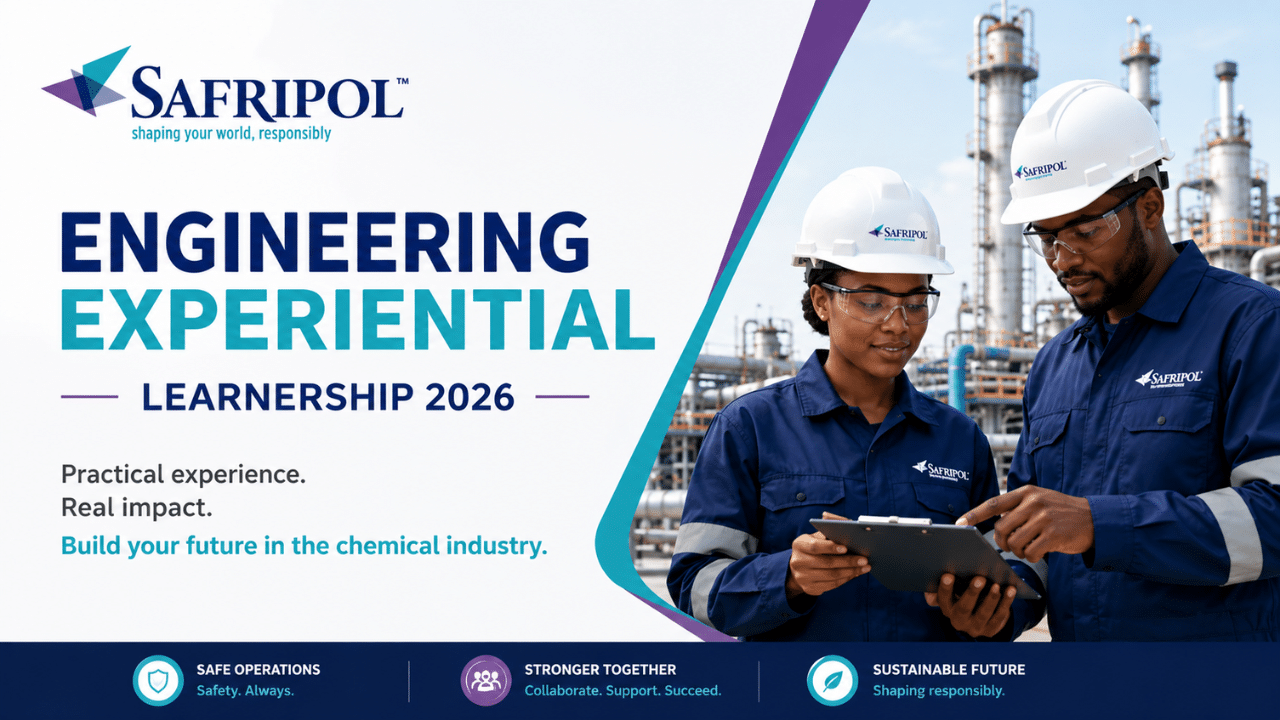
For many Chemical Engineering graduates, earning a qualification is only the first step towards building a successful career. The biggest challenge often comes after graduation when employers require practical industry experience before offering permanent employment opportunities.
To help bridge this gap, Safripol has opened applications for its Engineering Experiential Learnership Programme 2026. The programme is designed to provide Chemical Engineering graduates with valuable workplace exposure, technical training, and hands-on experience within a modern chemical manufacturing environment.
Participants will gain insight into real-world plant operations, process engineering activities, production systems, and operational improvement projects while working alongside experienced engineering professionals. This opportunity allows graduates to develop both technical and professional skills that are highly sought after throughout South Africa’s manufacturing and petrochemical sectors.
About Safripol
Safripol is one of South Africa’s leading polymer producers, supplying materials used across various industries including packaging, agriculture, construction, healthcare, automotive manufacturing, and consumer products.
Operating large-scale manufacturing facilities, the company plays a significant role in South Africa’s industrial and chemical sectors. Through its graduate development and experiential learning programmes, Safripol continues to invest in developing future engineering talent and strengthening technical skills within the industry.
About Safripol Engineering Experiential Learnership 2026
The Safripol Engineering Experiential Learnership Programme combines structured learning with practical workplace experience to prepare graduates for careers in engineering and manufacturing.
The programme is specifically designed to expose participants to the complete manufacturing value chain, helping them understand how engineering principles are applied in large-scale chemical production environments.
Successful candidates will gain exposure to:
- Chemical manufacturing processes
- Process engineering principles
- Production operations
- Plant equipment and systems
- Technical investigations
- Process optimisation projects
- Operational troubleshooting
- Continuous improvement initiatives
- Workplace safety systems
- Cross-functional engineering teams
Graduates will rotate through various operational areas and departments to ensure broad exposure to different aspects of plant operations.
Learning and Development Opportunities
One of the biggest advantages of the programme is the opportunity to learn directly from experienced engineers and technical specialists.
Throughout the programme, learners may be involved in:
- Technical studies and investigations
- Engineering simulations
- Data collection and analysis
- Production monitoring
- Process optimisation projects
- Equipment performance assessments
- Root cause analysis exercises
- Operational efficiency projects
- Safety improvement initiatives
This practical exposure helps graduates understand the realities of industrial engineering environments while building confidence in applying their academic knowledge to real-world challenges.
Key Responsibilities
Successful candidates will be expected to actively participate in workplace learning and contribute to operational activities within the business.
Responsibilities may include:
- Undergoing structured on-the-job training
- Gaining practical experience within a chemical manufacturing environment
- Supporting engineering and technical teams
- Completing assigned technical projects and studies
- Assisting with process investigations
- Participating in plant improvement initiatives
- Rotating between departments based on operational requirements
- Working alongside process engineers and support teams
- Contributing to safe and efficient plant operations
- Preparing reports and project documentation where required
Minimum Requirements
Applicants must meet the following minimum requirements:
Academic Requirements
- Grade 12 (Matric)
- BTech in Chemical Engineering
OR
- BEng in Chemical Engineering
OR
- BSc in Chemical Engineering
Additional Requirements
Candidates should possess:
- Excellent communication skills
- Strong interpersonal abilities
- Ability to interact with employees at all levels
- Ability to work effectively under pressure
- A willingness to learn and develop professionally
Advantageous Experience
The following will be beneficial:
- Exposure to chemical operations
- Previous experience within a manufacturing environment
- Understanding of industrial processes
- Familiarity with production environments
Why Chemical Engineering Graduates Should Consider This Opportunity
Many graduate programmes focus primarily on office-based exposure. Safripol’s experiential programme offers something different by providing direct access to industrial manufacturing operations.
Participants gain exposure to:
- Real production environments
- Industrial process control systems
- Manufacturing technologies
- Engineering problem-solving
- Process optimisation techniques
- Operational decision-making
- Industry best practices
This practical experience can significantly strengthen a graduate’s CV and improve employability within engineering, manufacturing, petrochemical, mining, and industrial sectors.
Career Opportunities After Completion
The experience gained through this programme can support future career paths including:
- Process Engineer
- Production Engineer
- Manufacturing Engineer
- Plant Engineer
- Operations Engineer
- Process Specialist
- Continuous Improvement Engineer
- Technical Services Engineer
- Project Engineer
- Production Supervisor
The skills developed during the programme are transferable across numerous industrial sectors throughout South Africa.
Skills You Can Expect to Develop
Participants may develop competencies in:
- Process engineering
- Technical problem-solving
- Process optimisation
- Data analysis
- Manufacturing systems
- Engineering project management
- Workplace communication
- Health and safety compliance
- Team collaboration
- Industrial operations
These skills are highly valued by employers within both the public and private sectors.
Why Experiential Learning Matters
One of the biggest challenges facing engineering graduates is the gap between theoretical knowledge and practical workplace experience.
Experiential learning programmes help close that gap by allowing graduates to apply classroom knowledge in real industrial environments. This not only improves technical competence but also helps graduates understand workplace expectations, operational challenges, and professional engineering practices.
For many graduates, experiential learning programmes become the foundation upon which successful engineering careers are built.
Thabang Maimela’s Tip
Chemical Engineering remains one of the most versatile engineering qualifications in South Africa. Graduates who gain practical plant experience early in their careers often place themselves in a stronger position when applying for permanent engineering roles. Programmes like the Safripol Engineering Experiential Learnership offer valuable exposure that can accelerate both professional growth and long-term career opportunities.
Explore More Opportunities on CareersPursuit
- What is Work Integrated Learning
- Wha is P1 & P2 ?
- Engineering Learnerships Guide
- What is merSETA Full Guide
Closing Date: 19 June 2026
Apply Now For The Safripol Learnership Programme
Disclaimer
CareersPursuit shares publicly available opportunities for informational purposes only and is not affiliated with the companies or organisations mentioned unless explicitly stated otherwise. Do not send your personal information, CV, or applications directly to CareersPursuit. Always verify opportunity details through official channels before applying.
- About the Author
- Latest Posts

I am Thabang Maimela, Founder and Editor of CareersPursuit and YouthSETA, two South African platforms dedicated to helping individuals access employment opportunities, skills development programmes, and career growth resources. Through CareersPursuit, I focus on jobs, internships, apprenticeships, graduate programmes, learnerships, and career advice, while YouthSETA specialises in SETA learnerships, skills programmes, youth development initiatives, and workplace readiness resources. My mission is to make reliable, up to date information more accessible, helping South Africans build skills, improve employability, and navigate their career journeys with confidence. Read more about the author on the About Us page.