
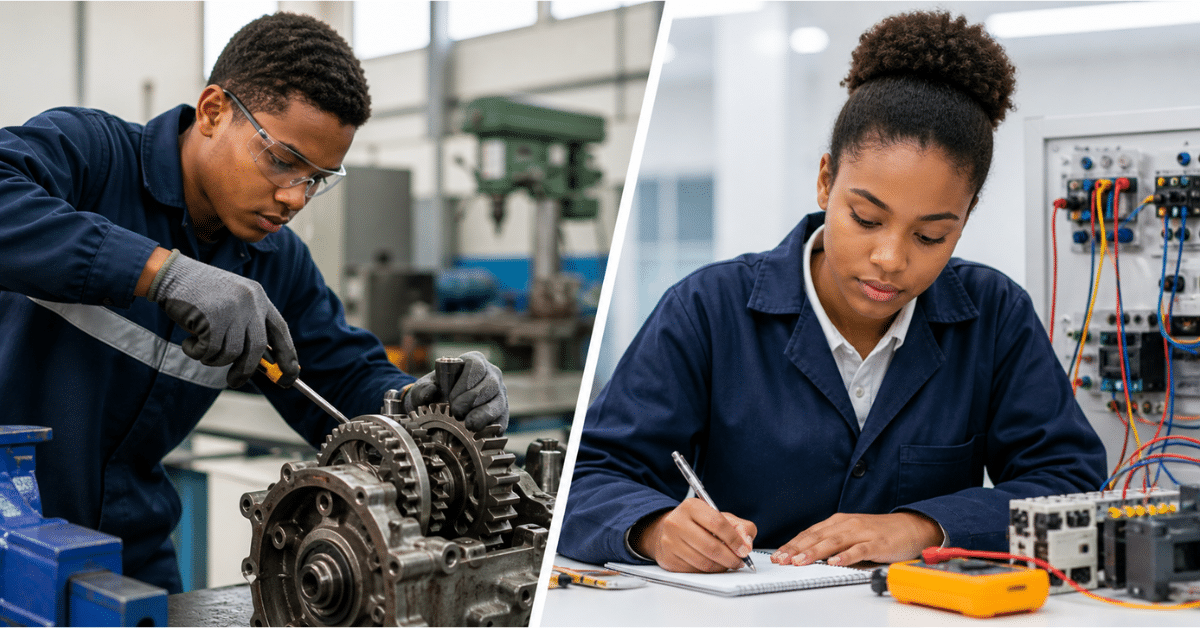
Here is a guide on: Apprenticeships vs Engineering Learnerships (2026): What’s the Difference & Which One Should You Choose?
If you’re planning to build a career in engineering or technical trades in South Africa, you’ve probably come across two common pathways: apprenticeships and engineering learnerships.
While both offer practical training and career opportunities, they are not the same — and choosing the right one can have a big impact on your future.
In this guide, we break down the key differences, benefits, requirements, and career outcomes so you can make the right decision.
What Is an Apprenticeship?
An apprenticeship is a structured training programme designed to develop skilled artisans in specific trades.
These trades include:
- Electrician
- Fitter and Turner
- Diesel Mechanic
- Boilermaker
- Millwright
Apprenticeships are typically longer and more intensive, focusing heavily on practical, hands-on work.
Key Features of Apprenticeships
- Duration: 2 to 4 years
- Focus: Practical training + trade qualification
- Outcome: Trade Test (becoming a qualified artisan)
- Work Environment: Workshop, plant, or industrial setting
What Is an Engineering Learnership?
An engineering learnership is a work-based learning programme that combines theory and practical training.
These programmes are usually registered with:
They are designed to give learners entry-level skills and workplace exposure.
Key Features of Learnerships
- Duration: 12 to 24 months
- Focus: Theory + basic practical experience
- Outcome: National certificate or qualification
- Work Environment: Depends on industry (manufacturing, mining, etc.)
The Main Differences (Simple Breakdown)
| Feature | Apprenticeship | Engineering Learnership |
|---|---|---|
| Duration | 2–4 years | 12–24 months |
| Outcome | Trade Test (Artisan) | Certificate |
| Depth of Training | Advanced | Entry-level |
| Focus | Practical (hands-on) | Theory + practical |
| Career Level | Skilled artisan | Entry-level worker |
Which One Is Better?
The answer depends on your goals.
Choose an Apprenticeship If:
- You want to become a qualified artisan
- You are committed to long-term technical training
- You prefer hands-on, practical work
- You want higher earning potential in the long run
Choose a Learnership If:
- You want to gain experience quickly
- You don’t yet meet apprenticeship requirements
- You want to enter the workforce faster
- You plan to study or specialise later
Can a Learnership Lead to an Apprenticeship?
Yes — and this is a very smart pathway.
Many people:
- Start with a learnership
- Gain experience
- Move into an apprenticeship
???? This gives you a strong advantage because you already understand the work environment.
Requirements Comparison
Apprenticeships
- Grade 12 with Maths and Science
- N2 or higher qualification (often required)
- Strong technical interest
Learnerships
- Grade 12 (minimum)
- Sometimes N2/N3/N4
- Basic skills and willingness to learn
Salary and Earning Potential
Learnerships
- Offer a monthly stipend
- Lower pay during training
Apprenticeships
- Also offer a stipend
- Higher earning potential after qualification
???? Long-term:
Apprenticeships generally lead to higher-paying roles
Career Opportunities
After a Learnership
- Engineering Assistant
- Production Worker
- Process Operator
After an Apprenticeship
- Qualified Artisan
- Technician
- Specialist roles
???? Apprenticeships offer more career growth over time
Why This Difference Matters
Choosing the wrong path can:
- Delay your career
- Limit your earning potential
- Reduce growth opportunities
Understanding the difference helps you:
???? make better decisions early
Common Mistakes to Avoid
- Thinking learnerships and apprenticeships are the same
- Choosing based only on duration
- Not planning long-term career growth
- Applying without understanding requirements
Best Strategy (Smart Move)
If you’re unsure:
???? Start with a learnership
???? Then move into an apprenticeship
This gives you:
- Experience
- Skills
- Better chances of selection
Conclusion:
Both apprenticeships and engineering learnerships offer valuable opportunities — but they serve different purposes.
- Learnerships = entry into the workforce
- Apprenticeships = long-term career development
If you are serious about building a career in engineering, understanding this difference is crucial.
You can also check:
- Engineering Learnerships Guide
- Latest Apprenticeships Available
- About the Author
- Latest Posts

I am Thabang Maimela, Founder and Editor of CareersPursuit and YouthSETA, two South African platforms dedicated to helping individuals access employment opportunities, skills development programmes, and career growth resources. Through CareersPursuit, I focus on jobs, internships, apprenticeships, graduate programmes, learnerships, and career advice, while YouthSETA specialises in SETA learnerships, skills programmes, youth development initiatives, and workplace readiness resources. My mission is to make reliable, up to date information more accessible, helping South Africans build skills, improve employability, and navigate their career journeys with confidence. Read more about the author on the About Us page.