
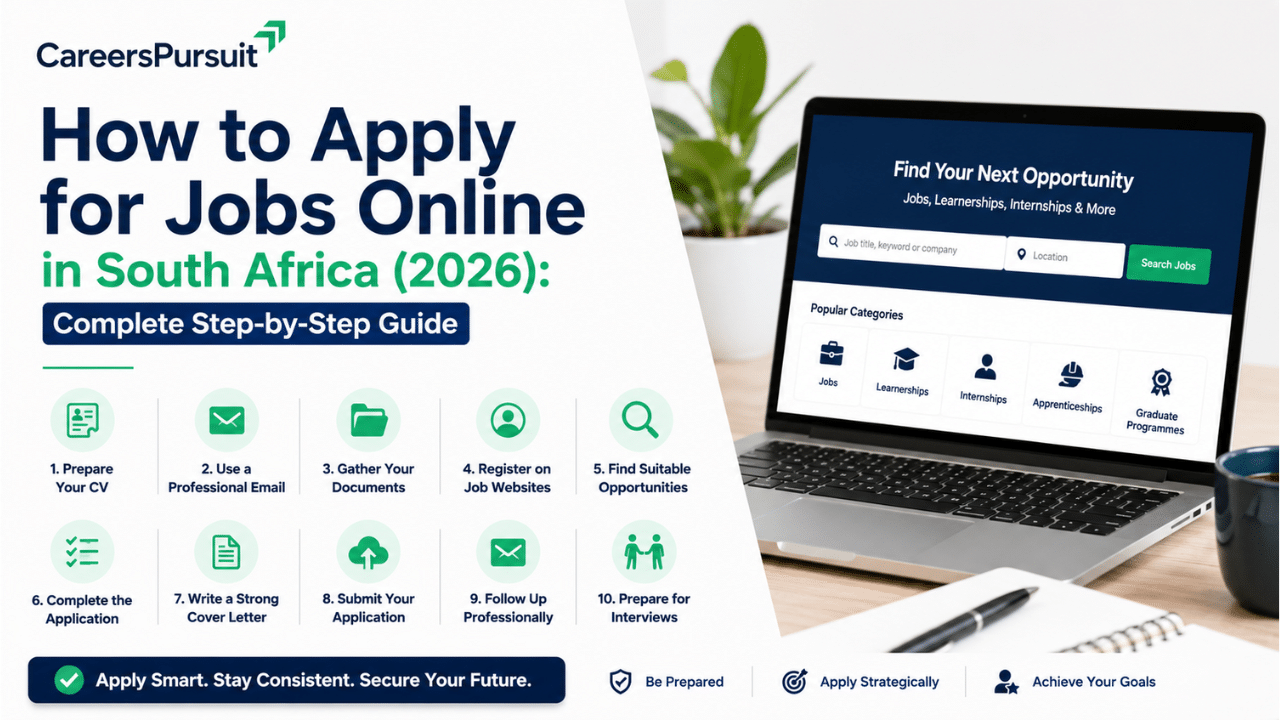
Applying for jobs online has become the standard way employers recruit candidates in South Africa. From learnerships and internships to graduate programmes and full time jobs, most opportunities now require applicants to submit their information electronically.
While online applications make it easier to apply for opportunities, many job seekers are rejected before reaching the interview stage because of simple mistakes such as incomplete applications, poorly prepared CVs or missing documents.
This guide will walk you through the entire online job application process and help you improve your chances of securing interviews and employment opportunities.
Why Online Job Applications Matter
Most employers use online recruitment systems to manage applications. These systems allow recruiters to review thousands of applications efficiently while identifying candidates who meet the required qualifications and experience.
Understanding how these systems work can give you a significant advantage over other applicants.
Whether you are applying for a learnership, internship, apprenticeship, graduate programme or permanent position, following a structured application process can greatly improve your chances of success.
Step 1: Prepare a Professional CV
Your CV is often the first thing an employer sees.
A well structured CV should clearly communicate your qualifications, skills and experience.
Information Every CV Should Include
- Full Name
- Contact Number
- Professional Email Address
- Physical Location
- Educational Qualifications
- Work Experience (if applicable)
- Skills
- References
Tips for Creating a Strong CV
- Keep your CV clear and easy to read.
- Use professional fonts.
- Check spelling and grammar carefully.
- Update your information regularly.
- Save your CV as a PDF whenever possible.
Common CV Mistakes
- Using outdated contact details.
- Including irrelevant information.
- Spelling and grammar errors.
- Submitting a CV longer than necessary.
- Using unprofessional email addresses.
Step 2: Create a Professional Email Address
Many employers communicate with applicants through email.
A professional email address creates a positive first impression.
Good Example
Poor Example
Why It Matters
Recruiters often receive hundreds of applications. A professional email address demonstrates maturity and professionalism.
If necessary, create a new email account specifically for job applications.
Step 3: Gather All Required Documents
Before applying, ensure you have digital copies of all required documents.
Common requirements include:
- Updated CV
- South African ID
- Matric Certificate
- Academic Transcripts
- Qualifications
- Driver’s Licence (if required)
- Cover Letter (if requested)
Pro Tip
Store all documents in a dedicated folder on your phone, laptop or cloud storage for quick access whenever opportunities become available.
Step 4: Register on Trusted Job Platforms
Creating profiles on reputable job websites increases your chances of discovering opportunities.
Recommended platforms include:
- Careerspursuit
- LinkedIn Jobs
- CareerJunction
- PNet
- Careers24
- You can Access more websites Comparison
Different platforms often advertise different opportunities, so relying on a single website can limit your chances.
Step 5: Search for Suitable Opportunities
One of the biggest mistakes job seekers make is applying for every vacancy they see. 10 Common mistakes to avoid
when sending applications.
Instead, focus on opportunities that match your qualifications and interests.
Before Applying, Ask Yourself
- Do I meet the minimum requirements?
- Do I have the required qualifications?
- Is the location suitable?
- Am I genuinely interested in the role?
Applying strategically often produces better results than submitting hundreds of applications randomly.
Step 6: Read the Job Description Carefully
Many applicants are rejected because they fail to follow instructions.
Before submitting your application:
- Read the full job description.
- Understand the requirements.
- Note application deadlines.
- Identify required documents.
- Follow employer instructions exactly.
Employers often use attention to detail as part of their screening process.
Step 7: Complete the Online Application Form
Most employers require applicants to complete online forms.
Important Tips
- Use accurate information.
- Double-check all entries.
- Ensure names match official documents.
- Upload the correct files.
- Use a stable internet connection.
Even small errors can result in missed opportunities.
Step 8: Write a Strong Cover Letter
Not every application requires a cover letter, but including one can help you stand out.
A cover letter should explain:
- Why you are interested in the opportunity.
- Why you are a suitable candidate.
- What skills or qualifications you can bring to the role.
Keep It Brief
Most effective cover letters are between 250 and 400 words.
Focus on quality rather than length.
Step 9: Submit Your Application
Before clicking the submit button, complete this checklist.
Application Checklist
CV attached
Supporting documents attached
Correct phone number
Correct email address
Application completed fully
Cover letter included (if required)
Taking a few extra minutes to review your application can prevent costly mistakes.
Step 10: Follow Up Professionally
After applying, avoid repeatedly contacting employers.
Instead:
- Wait one to two weeks.
- Send a professional follow-up email if appropriate.
- Continue applying for other opportunities.
Remember that recruitment processes can take time.
Step 11: Prepare for Interviews
If shortlisted, preparation becomes essential.
Interview Preparation Tips
- Research the company.
- Understand the role.
- Prepare answers to common questions.
- Dress professionally.
- Arrive early for in-person interviews.
- Test your technology for virtual interviews.
Confidence comes from preparation.
Common Reasons Job Applications Get Rejected
Understanding why applications fail can help you avoid common mistakes.
Incomplete Applications
Missing information can result in automatic rejection.
Missing Documents
Always submit every document requested by the employer.
Applying Without Meeting Requirements
Employers often filter applications based on minimum qualifications.
Poorly Written CVs
A weak CV can prevent you from reaching the interview stage.
Incorrect Contact Information
Many applicants miss opportunities because recruiters cannot reach them.
How to Apply for Jobs Without Experience
Lack of experience should not stop you from pursuing opportunities.
Many employers offer programmes designed specifically for first-time job seekers.
Opportunities to Consider
These opportunities allow candidates to gain valuable workplace experience while developing practical skills.
How Many Jobs Should You Apply For?
Quality is more important than quantity.
Instead of submitting 100 generic applications, focus on submitting well-prepared applications for positions that genuinely match your qualifications and interests.
A smaller number of high-quality applications often produces better results than a large number of rushed submissions.
Frequently Asked Questions
How many jobs should I apply for per day?
Focus on quality rather than quantity. Applying for a few suitable opportunities with strong applications is usually more effective than submitting dozens of generic applications.
Can I apply for jobs without experience?
Yes. Learnerships, internships, apprenticeships, graduate programmes and entry-level jobs are specifically designed for individuals with limited or no experience
Do I need a cover letter?
Not always. However, including a strong cover letter can help you stand out from other applicants.
How long does it take to hear back from employers?
Response times vary. Some employers respond within days, while others may take several weeks.
Can I use the same CV for every application?
You can, but customising your CV for each opportunity generally improves your chances of success.
My Conclusion:
Applying for jobs online may seem straightforward, but small details can make a significant difference. Preparing a professional CV, following instructions carefully and submitting complete applications can dramatically improve your chances of securing interviews and employment opportunities.
Success rarely happens after a single application. Stay consistent, keep improving your application materials and continue pursuing opportunities that align with your goals. With persistence and preparation, you can significantly increase your chances of finding meaningful employment in South Africa.
- About the Author
- Latest Posts

I am Thabang Maimela, Founder and Editor of CareersPursuit and YouthSETA, two South African platforms dedicated to helping individuals access employment opportunities, skills development programmes, and career growth resources. Through CareersPursuit, I focus on jobs, internships, apprenticeships, graduate programmes, learnerships, and career advice, while YouthSETA specialises in SETA learnerships, skills programmes, youth development initiatives, and workplace readiness resources. My mission is to make reliable, up to date information more accessible, helping South Africans build skills, improve employability, and navigate their career journeys with confidence. Read more about the author on the About Us page.