
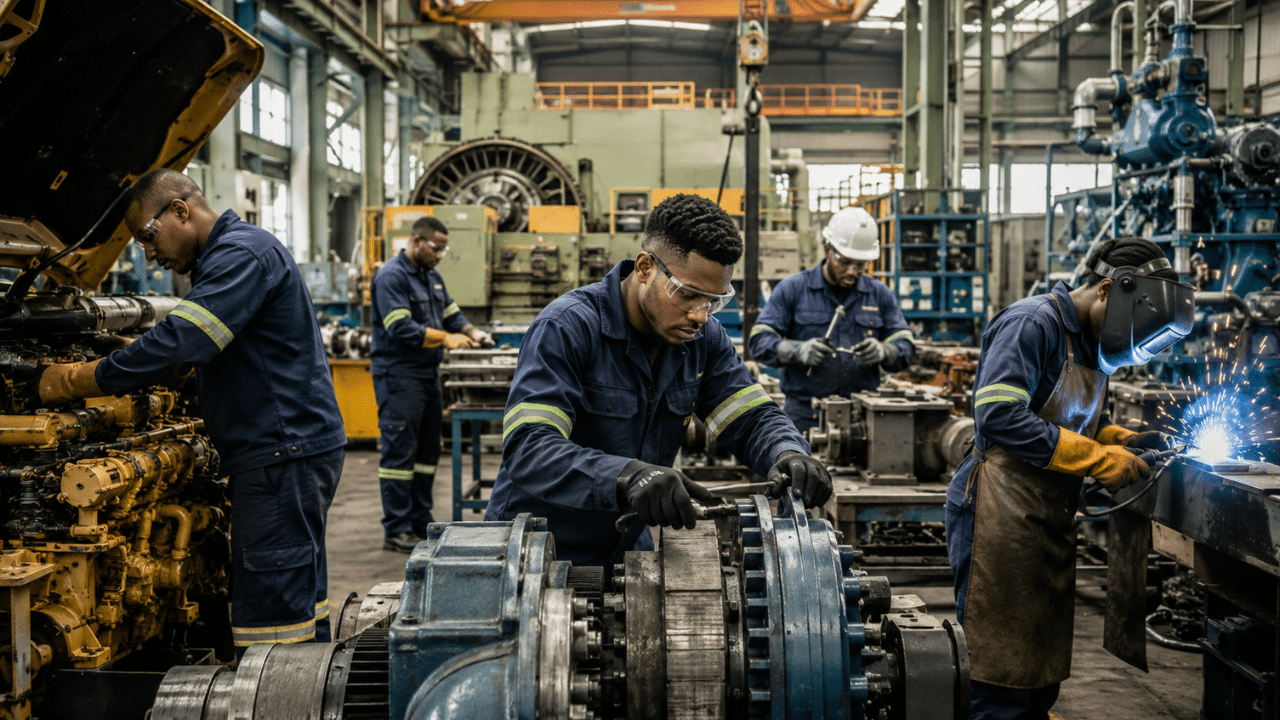
South Africa’s mines, factories, power stations, workshops, and manufacturing plants all have one thing in common they depend on skilled artisans to keep machinery operating safely and efficiently.
While many career discussions focus on university degrees, thousands of South Africans build successful careers through apprenticeships, workplace training, and artisan development programmes. Mechanical trades remain among the most important occupations in the country because they support industries that drive economic growth, infrastructure development, manufacturing, mining, transport, and energy production.
From Millwrights maintaining automated production lines to Diesel Mechanics repairing heavy mining equipment, mechanical artisans are responsible for ensuring that critical machinery and systems continue to operate reliably.
As South Africa continues to invest in industrial development, renewable energy, mining, logistics, and manufacturing, demand for skilled mechanical artisans is expected to remain strong. Many employers continue to recruit apprentices, learners, and entry level technical workers to address the country’s ongoing artisan skills shortage.
This guide explores everything you need to know about Mechanical Trades and Assistants in South Africa, including career opportunities, apprenticeship pathways, trade qualifications, salaries, industry bodies, and longterm career prospects.
What Are Mechanical Trades?
Mechanical trades are skilled occupations focused on the installation, operation, maintenance, repair, fabrication, and optimisation of machinery, equipment, and mechanical systems.
Mechanical artisans work with equipment ranging from industrial pumps and conveyor systems to mining machinery, manufacturing equipment, engines, turbines, compressors, and automated production systems.
These trades are critical to industries such as:
- Mining
- Manufacturing
- Construction
- Transport and Logistics
- Energy Generation
- Agriculture
- Petrochemical Operations
- Food and Beverage Production
Mechanical artisans are often required to work according to recognised engineering, quality, and safety standards. Many of these standards are developed and maintained through organisations such as the South African Bureau of Standards (SABS), helping ensure consistency, reliability, and workplace safety across industries.
Popular Mechanical Trades in South Africa
Millwright
Millwrights are multi-skilled artisans who combine mechanical, electrical, and automation knowledge to install, maintain, troubleshoot, and repair industrial machinery.
Modern Millwrights often work with:
- Production equipment
- PLC systems
- Motors and drives
- Conveyors
- Robotics
- Automated manufacturing systems
Industries employing Millwrights include mining, manufacturing, food processing, packaging, logistics, and power generation.
Diesel Mechanic
Diesel Mechanics specialise in maintaining and repairing diesel-powered vehicles and heavy equipment.
Typical equipment includes:
- Mining machinery
- Haul trucks
- Earthmoving equipment
- Agricultural machinery
- Transport fleets
- Construction vehicles
Diesel Mechanics remain highly sought after because industries across South Africa rely heavily on diesel-powered equipment.
Boilermaker
Boilermakers fabricate, assemble, install, and repair metal structures and components used throughout industry.
Their work often includes:
- Pressure vessels
- Steel structures
- Storage tanks
- Industrial equipment
- Pipe systems
Many Boilermakers develop advanced welding skills throughout their careers. Industry organisations such as the South African Institute of Welding (SAIW) support welding education, certification, and professional development within the engineering sector.
Mechanical Fitter
Mechanical Fitters install, assemble, maintain, and repair mechanical equipment used in industrial environments.
They frequently work on:
- Pumps
- Gearboxes
- Compressors
- Conveyors
- Rotating equipment
- Industrial machinery
Mechanical Fitters play an essential role in preventative maintenance and reliability programmes.
Fitter and Turner
Fitter and Turners manufacture, repair, and maintain precision engineered components used in machinery and industrial systems.
Their work requires high levels of accuracy and technical skill, often involving machine tools such as lathes, milling machines, grinders, and CNC equipment.
Welder
Welders join metal components using specialised welding techniques.
Career opportunities exist within:
- Mining
- Construction
- Manufacturing
- Petrochemical industries
- Marine engineering
- Infrastructure development
Highly skilled welders can pursue specialist pathways including coded welding, pipe welding, and structural welding.
Rigger
Riggers are responsible for lifting, moving, positioning, and securing heavy loads using cranes, hoists, and specialised lifting equipment.
Their expertise is critical within:
- Mining operations
- Construction projects
- Ports and logistics facilities
- Petrochemical plants
- Heavy engineering environments
Mechanical Assistants
Not every career in engineering begins with an apprenticeship.
Many employers recruit:
- Artisan Assistants
- Mechanical Assistants
- Workshop Assistants
- Maintenance Assistants
- General Engineering Assistants
These positions provide valuable workplace exposure and can often serve as stepping stones towards formal artisan development programmes.
For many young South Africans, assistant level roles provide an opportunity to gain practical experience while building the skills needed to pursue apprenticeships in the future.
Why Mechanical Trades Remain in Demand
Mechanical artisans remain essential because modern industries cannot operate without skilled technical professionals.
South African employers continue to recruit artisans to support:
- Mining operations
- Manufacturing facilities
- Energy generation plants
- Transport networks
- Construction projects
- Industrial maintenance programmes
Major employers frequently recruiting mechanical artisans include companies such as Transnet, Eskom, Sasol, Komatsu, Exxaro, Bell Equipment, Barloworld Equipment, Anglo American, Seriti, South32, and PepsiCo. Also Opportunities are available on CareersPursuit.
As technology advances, industries increasingly require artisans who can maintain both traditional mechanical systems and modern automated equipment.
How to Become a Mechanical Artisan in South Africa
Step 1: Complete Your School Education
Most apprenticeship programmes require:
- Grade 12 (Matric)
- Mathematics
- Physical Science
Strong performance in technical subjects can improve your chances of securing apprenticeship opportunities.
Step 2: Consider TVET College Studies
Many aspiring artisans pursue:
- N1–N6 Engineering Studies
- National Certificate Vocational (NCV) Programmes
- Occupational Qualifications
These qualifications help build the technical knowledge required for artisan development.
Step 3: Secure an Apprenticeship
An apprenticeship combines:
- Workplace learning
- Practical experience
- Classroom instruction
- Skills development
Many apprenticeship programmes within the engineering and manufacturing sector are supported through the Manufacturing, Engineering and Related Services SETA (merSETA), which plays an important role in developing future artisans and addressing skills shortages across South Africa.
Step 4: Complete Workplace Training
Apprentices must demonstrate competence through practical workplace activities, assessments, and logbook completion.
This stage allows learners to apply theoretical knowledge within real industrial environments.
Step 5: Pass the Trade Test
The Trade Test is the final assessment required before qualifying as an artisan.
Occupational qualifications and trade-related standards are overseen by the Quality Council for Trades and Occupations (QCTO), while national trade testing and artisan certification processes are supported through the National Artisan Moderation Body (NAMB).
Successfully passing the Trade Test demonstrates that an apprentice has achieved the required competency standard for their trade.
What Is a Red Seal Qualification?
A Red Seal qualification is one of the most recognised artisan credentials in South Africa.
It confirms that an artisan has successfully completed the required training and Trade Test requirements according to national standards.
Red Seal qualifications are commonly associated with trades such as:
- Millwright
- Diesel Mechanic
- Boilermaker
- Mechanical Fitter
- Fitter and Turner
- Welder
- Rigger
Many employers prefer candidates who hold recognised trade qualifications because they provide assurance of technical competence and workplace readiness.
Career Progression Opportunities
One of the advantages of mechanical trades is the variety of career progression pathways available.
Experienced artisans may advance into:
- Supervisory roles
- Maintenance Planning
- Reliability Engineering
- Technical Specialist Positions
- Workshop Management
- Operations Management
Some artisans continue their studies through engineering diplomas and degree programmes, creating opportunities for professional registration through the Engineering Council of South Africa (ECSA).
This allows experienced tradespeople to transition into broader engineering and management careers while building upon their practical industry experience.
Frequently Asked Questions
What are mechanical trades?
Mechanical trades are skilled careers focused on installing, maintaining, repairing and servicing machinery, equipment and mechanical systems used in industries such as mining, manufacturing, construction, transport and energy.
Do mechanical trades require university?
No. Most mechanical trades are entered through apprenticeships, learnerships, TVET college qualifications or workplace-based training programmes rather than university degrees.
What subjects do I need for mechanical apprenticeships?
Most employers prefer Mathematics, Physical Science, Engineering Science, Engineering Drawings and relevant N2–N6 trade subjects
What is a Trade Test?
A Trade Test is the final practical assessment that determines whether an apprentice is competent enough to qualify as an artisan.
What is a Red Seal qualification?
A Red Seal qualification confirms that an artisan has successfully completed the required training and trade test according to national standards.
Which mechanical trades are in demand?
High-demand mechanical trades include Millwright, Diesel Mechanic, Boilermaker, Mechanical Fitter, Fitter and Turner, Welder and Rigger.
Can I become an artisan with N2?
Yes. Many apprenticeship programmes accept candidates with N2 qualifications, especially when the subjects are relevant to the trade.
Are mechanical trades good careers in South Africa?
Yes. Mechanical trades remain valuable because mining, manufacturing, transport, energy and construction companies rely heavily on skilled artisans to keep equipment and operations running.
Which companies offer mechanical apprenticeships?
Companies such as Transnet, Eskom, Sasol, Komatsu, Exxaro, Barloworld Equipment, Bell Equipment, PepsiCo and Anglo American regularly offer artisan-related opportunities.
- About the Author
- Latest Posts

I am Thabang Maimela, Founder and Editor of CareersPursuit and YouthSETA, two South African platforms dedicated to helping individuals access employment opportunities, skills development programmes, and career growth resources. Through CareersPursuit, I focus on jobs, internships, apprenticeships, graduate programmes, learnerships, and career advice, while YouthSETA specialises in SETA learnerships, skills programmes, youth development initiatives, and workplace readiness resources. My mission is to make reliable, up to date information more accessible, helping South Africans build skills, improve employability, and navigate their career journeys with confidence. Read more about the author on the About Us page.