
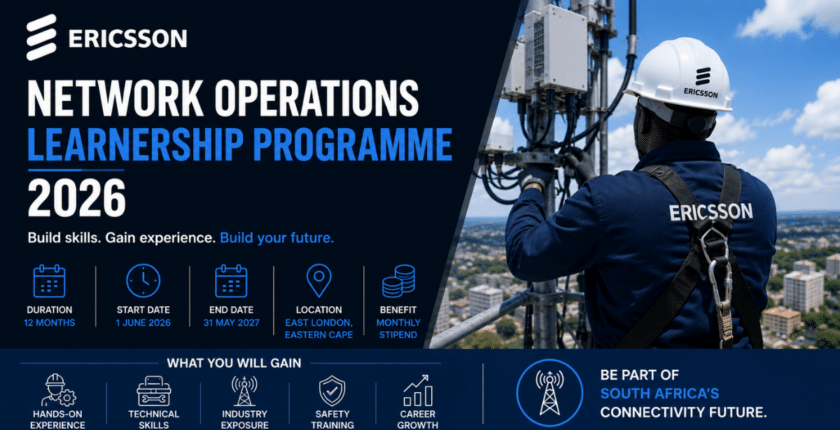
Ericsson Network Operations Learnership Programme 2026

Applicants are invited to apply for the Ericsson Network Operations Learnership Programme 2026
Young South Africans interested in technology, networking, telecommunications, and technical field operations now have an exciting opportunity to apply for the Telecommunication Network Operations Learnership Programme 2026 taking place in East London, Eastern Cape.
This 12-month learnership programme offers unemployed youth the opportunity to gain hands-on practical experience within the telecommunications industry while completing the accredited Telecommunication Network Operations qualification (SAQA ID 59057, NQF Level 4).
The programme is aimed at developing future telecommunications professionals by combining structured learning, practical workplace exposure, field operations, networking systems training, and technical maintenance experience.
For many young South Africans who are passionate about ICT, networking, telecommunications infrastructure, and technical operations, this learnership could become an important stepping stone toward building a long-term technical career within South Africa’s rapidly growing digital and communications sector.
About the Telecommunication Network Operations Learnership Programme
The Telecommunication Network Operations Learnership Programme has been designed to equip young South Africans with the technical skills, workplace exposure, operational experience, and safety knowledge needed to succeed within the telecommunications and networking industry.
Successful learners will gain exposure to real telecommunications infrastructure and operational environments while working alongside experienced technical professionals.
Participants will be introduced to:
- Telecommunications infrastructure
- Tower operations
- Networking systems
- Fiber and cable installations
- Technical maintenance
- Telecommunications safety procedures
- Equipment testing and repairs
- Operational support services
Learners will also participate in practical workplace activities while building technical confidence and gaining valuable industry experience.
This opportunity is ideal for candidates who:
- enjoy technical work
- are passionate about networking and ICT
- are willing to work outdoors
- are comfortable with practical tasks
- enjoy solving technical problems
- want to build careers in telecommunications and infrastructure operations
What Learners Will Gain
Participants selected for the programme will benefit from:
- Monthly stipend
- Accredited workplace training
- Real-world technical experience
- Exposure to telecommunications infrastructure
- Networking and operational skills development
- Telecommunications tower safety training
- Maintenance and repair experience
- Practical fieldwork exposure
- Professional workplace experience
- Career development opportunities
Learners will also develop workplace skills such as:
- teamwork
- communication
- discipline
- time management
- problem-solving
- technical troubleshooting
Practical Technical Exposure
During the learnership, successful candidates may gain exposure to various operational and technical activities within the telecommunications environment.
Learners may assist with:
- Installation of telecommunication cables
- Installation of antennas and microwave dishes
- Telecommunication tower operations
- Fiber optic cable installation and maintenance
- Equipment repairs and maintenance
- Technical inspections and audits
- Structural installations on communication towers
- Emergency maintenance and restoration work
- Telecommunications testing and diagnostics
- Site operational support
- Networking system exposure
- Infrastructure maintenance activities
Participants will also learn how telecommunications teams maintain operational network infrastructure and ensure reliable communication systems remain functional.
Tower Work and Field Operations
One of the key aspects of this learnership is exposure to technical field operations.
Successful candidates may be required to:
- climb towers
- work at elevated heights
- perform outdoor technical work
- travel to operational sites
- work in varying weather conditions
Candidates will receive safety guidance and operational training under supervision.
The programme also includes Ericsson tower training at the required level.
Safety and Compliance Training
Health and safety form an important part of telecommunications operations.
Learners will be trained on:
- workplace safety procedures
- operational safety guidelines
- equipment handling
- risk awareness
- safe tower operations
- compliance procedures
- emergency response processes
Participants must understand and strictly follow all health and safety requirements throughout the programme.
Eastern Cape Site Travel Requirements
Training will primarily take place in East London; however, after approximately 4–6 months, learners may be required to travel to various operational sites within the Eastern Cape province.
Applicants should therefore be willing to:
- travel when required
- work on-site
- work flexible shifts
- work outside normal business hours when necessary
This may include:
- weekends
- night shifts
- emergency maintenance operations
Thabang Maimela’s Tip
When applying for ICT, networking, or telecommunications learnerships, your CV should immediately show your technical strengths. Place qualifications such as ICT, Networking, Digital Electronics, Telecommunications, or Low Voltage Systems near the top of your CV so recruiters can quickly identify your technical background. If you have ever worked with computers, networking equipment, routers, cabling, or electronics — even through school projects or TVET practicals — include that experience because it can help strengthen your application significantly.
Minimum Requirements For Ericsson Network Operations Learnership Programme 2026
Applicants must meet the following minimum requirements before applying.
Educational Requirements
Candidates must have:
- Matric / National Senior Certificate
(Technical subjects will be advantageous)
OR
TVET qualifications in:
- IT
- ICT
- Low Voltage
- Telecommunications
- Digital Electronics
OR
University of Technology qualifications in:
- ICT
- Networking
Skills and Competencies
Applicants should demonstrate:
- Good written and spoken English communication skills
- Willingness to learn
- Ability to work in teams
- Good interpersonal skills
- Technical problem-solving abilities
- Organisational skills
- Administrative skills
- Flexibility under pressure
- Ability to multitask
- Knowledge of networking principles
- Understanding of Ethernet standards
- Basic understanding of telecommunications construction
- Ability to work outdoors
Why Telecommunications Careers Are Growing in South Africa
South Africa’s telecommunications industry continues to expand rapidly due to increasing demand for:
- internet connectivity
- fiber infrastructure
- mobile communications
- networking services
- digital communication systems
As the country continues investing in digital infrastructure and network expansion, skilled telecommunications professionals remain in high demand.
This creates long-term career opportunities in:
- networking
- telecommunications operations
- ICT support
- fiber infrastructure
- network maintenance
- field operations
- technical infrastructure management
Learnership programmes like this help young South Africans gain practical experience while building technical careers within one of the country’s fastest-growing industries.
Required Application Documents
Applicants must include the following documents:
- Updated CV
- Certified copy of ID
- Certified copy of certificates/qualifications
Applications that do not include all required supporting documents may not be considered.
Location Requirement
Applicants must:
- Reside in East London, Eastern Cape
- Be willing to travel within Eastern Cape when required
Explore More Opportunities on CareersPursuit
- Available Learnerships in South Africa
- 5 Recent Learnerships to apply for
- How to apply for Learnerships 2026 Guide
- How to write a professional CV 2026 Guide
- How to prepare for an interview full guide
Candidates are encouraged to apply as early as possible and ensure all supporting documents are submitted correctly before the programme begins.
Closing Date: Not Specified
You can also view this opportunity as a web story here
- About the Author
- Latest Posts

I am Thabang Maimela, Founder and Editor of CareersPursuit and YouthSETA, two South African platforms dedicated to helping individuals access employment opportunities, skills development programmes, and career growth resources. Through CareersPursuit, I focus on jobs, internships, apprenticeships, graduate programmes, learnerships, and career advice, while YouthSETA specialises in SETA learnerships, skills programmes, youth development initiatives, and workplace readiness resources. My mission is to make reliable, up to date information more accessible, helping South Africans build skills, improve employability, and navigate their career journeys with confidence. Read more about the author on the About Us page.