
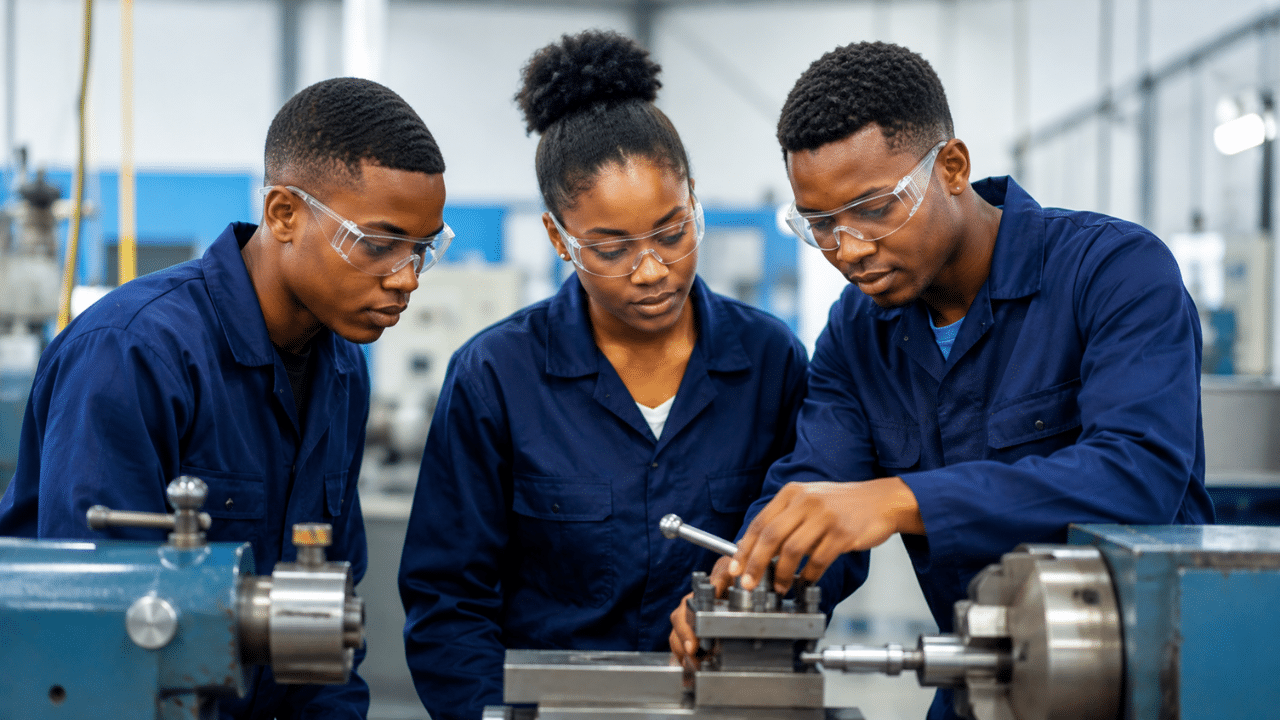
A full guide on What Are P1 and P2? A Complete Guide to P1 and P2 Training in South Africa
Many engineering students in South Africa encounter the terms P1 and P2 during their studies, particularly at Universities of Technology and TVET Colleges. However, many students are often unsure about what P1 and P2 training involves, why it is required, and how to secure placement opportunities.
P1 and P2 are practical training components that form part of many engineering diploma qualifications. These workplace training programmes allow students to gain hands-on industry experience while applying the theoretical knowledge they have learned in the classroom.
In simple terms, P1 and P2 training provide students with an opportunity to work in a real engineering environment before graduating.
What Does P1 and P2 Mean?
P1 and P2 refer to two phases of experiential learning that engineering students must complete as part of their qualification requirements.
P1 Training
P1 is the first phase of practical training. During this period, students are introduced to the workplace environment and gain exposure to basic engineering processes, equipment, systems, and procedures.
The purpose of P1 is to help students understand how theoretical concepts are applied in real-world operations.
P2 Training
P2 is the second phase of practical training and is generally more advanced. Students are expected to perform more technical tasks and gain deeper exposure to their chosen engineering discipline.
P2 training builds on the experience gained during P1 and prepares students for professional careers within the engineering sector.
Together, P1 and P2 form an essential part of engineering education and workplace readiness.
Why Is P1 and P2 Training Important?
One of the biggest challenges facing engineering graduates is the lack of practical experience.
Many employers seek candidates who can demonstrate both academic knowledge and workplace competence. P1 and P2 training help bridge this gap by providing valuable hands-on experience before graduation.
Benefits of P1 and P2 training include:
- Practical workplace experience
- Exposure to industry equipment and systems
- Development of technical skills
- Improved employability
- Understanding workplace procedures
- Networking opportunities
- Professional development
- Increased confidence in engineering environments
Students who successfully complete P1 and P2 training often have a competitive advantage when applying for jobs after graduation.
Which Engineering Fields Require P1 and P2?
P1 and P2 training opportunities are commonly available in the following disciplines:
Mechanical Engineering
Mechanical Engineering students may gain experience in:
- Plant maintenance
- Manufacturing operations
- Mechanical fitting
- Production systems
- Quality control
- Engineering workshops
Electrical Engineering
Electrical Engineering students may be exposed to:
- Electrical installations
- Power systems
- Instrumentation
- Maintenance operations
- Industrial automation
- Control systems
Civil Engineering
Civil Engineering students often participate in:
- Construction projects
- Site inspections
- Infrastructure development
- Surveying
- Project management support
Chemical Engineering
Chemical Engineering students may gain exposure to:
- Production processes
- Laboratory operations
- Process control systems
- Quality assurance
- Plant operations
Industrial Engineering
Industrial Engineering students may assist with:
- Process improvement
- Production planning
- Supply chain operations
- Manufacturing systems
- Operational efficiency projects
What Is the Difference Between P1 and P2, WIL, Internships and Learnerships?
Many students confuse these programmes because they all involve workplace exposure.
P1 and P2 Training
- Required for many engineering diplomas.
- Focuses on practical engineering experience.
- Forms part of qualification requirements.
- Usually completed while studying.
Work Integrated Learning (WIL)
- Broader term covering workplace-based learning.
- Includes P1 and P2 in many qualifications.
- Can apply to various fields beyond engineering.
- More about Work Integrated Learning
Internship
- Usually completed after graduation.
- Provides workplace experience.
- May be paid or unpaid.
- Not always linked to a qualification.
- More About Internship
Learnership
- Combines structured learning with workplace experience.
- Leads to a registered qualification.
- Usually includes a monthly stipend.
- Open to unemployed youth and employed workers.
- More about Learnerships
Who Offers P1 and P2 Opportunities?
Many organisations across South Africa offer P1 and P2 training opportunities.
Common employers include:
Mining Companies
Mining companies regularly recruit P1 and P2 students in engineering disciplines.
Manufacturing Companies
Large manufacturing firms provide practical exposure in production and maintenance environments.
Municipalities
Municipal engineering departments often offer experiential learning opportunities.
Government Departments
Various government entities support skills development through workplace training programmes.
State-Owned Enterprises
State-owned companies frequently offer engineering workplace experience programmes.
Private Engineering Firms
Engineering consulting and project management firms also provide practical training opportunities.
What Documents Are Required for P1 and P2 Applications?
Most employers request the following:
- Updated Curriculum Vitae (CV)
- Certified South African ID Copy
- Academic Record
- Proof of Registration
- P1/P2 Letter from Institution
- Certified Matric Certificate
- Relevant Qualification Documents
Students should ensure all documents are current and professionally prepared.
How Long Does P1 and P2 Training Last?
The duration depends on the institution and qualification.
Most programmes require:
- 6 months to 12 months for P1
- 6 months to 12 months for P2
Some qualifications require a combined period of practical training before graduation.
Students should confirm exact requirements with their institution.
Are P1 and P2 Students Paid?
This depends on the employer.
Some organisations offer:
- Monthly stipends
- Travel allowances
- Accommodation assistance
- Meal allowances
Other placements may be unpaid but still provide valuable workplace experience required for graduation.
Students should carefully review programme details before applying.
Skills Students Develop During P1 and P2
During workplace training, students commonly develop:
Technical Skills
- Equipment operation
- Maintenance procedures
- Fault finding
- Technical reporting
- Quality assurance
Professional Skills
- Communication
- Teamwork
- Time management
- Problem-solving
- Workplace professionalism
These skills help students transition smoothly into full-time employment after graduation.
Tips for Securing a P1 and P2 Placement
Competition for placements can be high, especially in engineering fields.
Apply Early
Many employers advertise opportunities months before placements begin.
Prepare a Professional CV
Ensure your CV is clear, accurate, and highlights relevant qualifications.
Apply Widely
Do not limit applications to a few companies.
Monitor Opportunity Platforms
Regularly check company websites and opportunity platforms for new opportunities. Companies like Sibanye- Stillwater and many more.
Maintain Good Academic Performance
Strong academic results can improve your chances of securing a placement.
Can P1 and P2 Lead to Permanent Employment?
Yes.
Many employers use P1 and P2 programmes to identify future talent.
Students who demonstrate strong technical abilities, professionalism, and a willingness to learn may later be considered for:
- Graduate Programmes
- Apprenticeships
- Internships
- Permanent Employment
Although employment is not guaranteed, workplace training often opens doors to future career opportunities.
Common Challenges Students Face
Many students experience challenges when searching for P1 and P2 placements.
These may include:
- Limited opportunities
- High competition
- Transportation costs
- Relocation requirements
- Delayed responses from employers
Persistence is important. Many successful engineers applied to dozens of opportunities before securing their placements.
Thabang Maimela‘s conclusion on What Are P1 and P2? A Complete Guide to P1 and P2 Training in South Africa
P1 and P2 training play a critical role in developing South Africa’s future engineers. These practical workplace learning programmes allow students to gain valuable hands-on experience, strengthen technical skills, and prepare for successful careers in engineering.
Whether you are studying Mechanical Engineering, Electrical Engineering, Civil Engineering, Chemical Engineering, or Industrial Engineering, completing your P1 and P2 training can significantly improve your employability and help you transition confidently into the workplace.
Students are encouraged to start applying early, keep their documents updated, and actively seek opportunities that align with their field of study. The experience gained during P1 and P2 training can become the foundation for a rewarding and successful engineering career.
- About the Author
- Latest Posts

I am Thabang Maimela, Founder and Editor of CareersPursuit and YouthSETA, two South African platforms dedicated to helping individuals access employment opportunities, skills development programmes, and career growth resources. Through CareersPursuit, I focus on jobs, internships, apprenticeships, graduate programmes, learnerships, and career advice, while YouthSETA specialises in SETA learnerships, skills programmes, youth development initiatives, and workplace readiness resources. My mission is to make reliable, up to date information more accessible, helping South Africans build skills, improve employability, and navigate their career journeys with confidence. Read more about the author on the About Us page.