
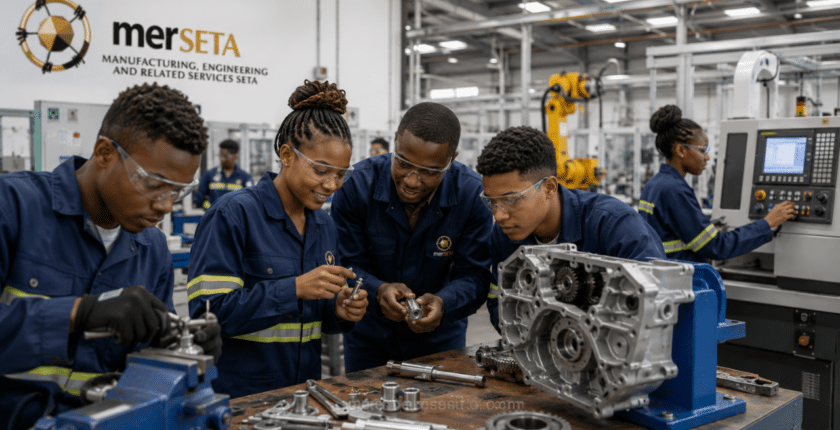
merSETA Learnerships in South Africa (2026): Complete Guide to Engineering and Artisan Careers
Learn everything about merSETA Learnerships in South Africa, including engineering careers, apprenticeships, artisan development, Red Seal trades, funding, stipends, qualifications, and application processes.
What is merSETA?
The Manufacturing, Engineering and Related Services Sector Education and Training Authority (merSETA) is one of South Africa’s largest and most influential Sector Education and Training Authorities (SETAs). Operating under the Department of Higher Education and Training (DHET), merSETA is responsible for developing skills across the manufacturing, engineering, automotive, metal, and related industries.
For thousands of South Africans, merSETA serves as a gateway into some of the country’s highest-demand technical careers through learnerships, apprenticeships, artisan development programmes, and occupational qualifications.
As South Africa continues to face shortages of qualified artisans, technicians, and engineering professionals, merSETA plays a crucial role in ensuring industries have access to skilled workers capable of supporting economic growth and industrial development.
You can read more about SETAs on this career guide.
How merSETA Fits Into South Africa’s Skills Development System
To understand merSETA, it is important to understand how South Africa’s skills development framework operates.
The Department of Higher Education and Training (DHET) oversees the country’s post-school education and training system.
Within this framework:
- SAQA manages qualification recognition.
- The National Qualifications Framework (NQF) regulates qualification levels.
- The Quality Council for Trades and Occupations (QCTO) oversees occupational qualifications.
- merSETA facilitates skills development within engineering, manufacturing, and related sectors.
Together, these organisations ensure that learners receive recognised qualifications aligned with industry needs.
Industries Covered by merSETA
One of the reasons merSETA is so important is the sheer size of the industries it supports.
Manufacturing
Manufacturing remains a major contributor to South Africa’s economy.
Career opportunities include:
- Production Operators
- Production Technicians
- Manufacturing Supervisors
- Quality Controllers
- Industrial Process Operators
Many production learnerships advertised by major employers are funded or aligned with merSETA programmes.
Engineering
Engineering is one of the largest sectors supported by merSETA.
Common fields include:
- Mechanical Engineering
- Electrical Engineering
- Industrial Engineering
- Mechatronics
- Instrumentation
- Production Engineering
This is why many engineering learnerships and apprenticeships are linked to merSETA-funded qualifications.
Automotive Industry
South Africa’s automotive sector is one of the most advanced on the African continent.
Major employers operating within the merSETA ecosystem include:
- Toyota South Africa
- Volkswagen South Africa
- BMW South Africa
- Mercedes-Benz South Africa
- Ford South Africa
- Nissan South Africa
- Isuzu South Africa
These companies regularly participate in skills development initiatives aimed at developing future technicians, artisans, and engineering professionals.
Metal and Steel Industry
The metal sector remains critical to industrial development.
Opportunities include:
- Welding
- Fabrication
- Structural Steel Work
- Metal Production
- Engineering Maintenance
Many artisan trades originate within this industry.
Motor Retail and Components
This sector includes:
- Vehicle Maintenance
- Automotive Components
- Mechanical Repairs
- Parts Manufacturing
- Vehicle Assembly
Many Diesel Mechanic and Motor Mechanic career pathways begin here.
Understanding Artisan Development Through merSETA
One of merSETA’s most important responsibilities is artisan development.
What is an Artisan?
An artisan is a skilled professional who has completed formal training and demonstrated practical competence in a specific trade.
Examples include:
- Electricians
- Diesel Mechanics
- Boilermakers
- Millwrights
- Welders
- Fitters and Turners
Artisans remain among the most sought-after professionals in South Africa.
What is an Apprenticeship?
An apprenticeship combines classroom-based learning with workplace experience.
Unlike many learnerships, apprenticeships focus specifically on preparing learners for trade occupations and ultimately a trade test.
What is a Trade Test?
A trade test is a formal assessment used to determine whether an apprentice possesses the practical and theoretical competence required to become a qualified artisan.
Passing the trade test is one of the final steps in becoming a recognised artisan.
What is a Red Seal?
A Red Seal is the nationally recognised certification awarded to qualified artisans after successfully completing their trade test.
The Red Seal represents the highest level of trade recognition and demonstrates that an artisan meets national occupational standards.
The Role of NAMB and QCTO
Two organisations play a major role in artisan development:
National Artisan Moderation Body (NAMB)
NAMB oversees artisan development and trade testing processes across South Africa.
Quality Council for Trades and Occupations (QCTO)
QCTO ensures occupational qualifications meet industry requirements and national standards.
These bodies work closely with merSETA to maintain the quality of artisan training.
Common merSETA Learnerships
merSETA supports numerous occupational qualifications and learnerships.
Popular examples include:
Engineering Learnerships
- Mechanical Engineering
- Electrical Engineering
- Industrial Engineering
Production Technology Learnerships
Learners gain exposure to:
- Production Processes
- Quality Systems
- Manufacturing Operations
Mechatronics Learnerships
Combining:
- Mechanical Systems
- Electrical Systems
- Automation
- Robotics
Automotive Manufacturing Learnerships
Focused on:
- Vehicle Assembly
- Automotive Production
- Quality Control
Welding Learnerships
Preparing learners for careers in:
- Fabrication
- Construction
- Manufacturing
Fitting and Machining Learnerships
Developing skills in:
- Machine Maintenance
- Precision Engineering
- Industrial Production
Common Apprenticeships Supported by merSETA
Many of South Africa’s most recognised trades fall within the merSETA ecosystem.
Electrician Apprenticeship
One of the country’s most in-demand artisan careers.
Diesel Mechanic Apprenticeship
Supported by major employers including:
- Transnet
- Bell Equipment
- Barloworld
- Mining Companies
Boilermaker Apprenticeship
A critical trade within manufacturing and mining.
Millwright Apprenticeship
Combines:
- Mechanical Skills
- Electrical Skills
- Industrial Maintenance
Instrumentation Apprenticeship
Focuses on:
- Industrial Automation
- Process Control Systems
Fitter and Turner Apprenticeship
One of the oldest and most respected engineering trades.
Welder Apprenticeship
Essential to manufacturing, construction, and heavy industry.
The Four Blocks Framework
Most successful artisans follow a progression model often referred to as the Four Blocks Framework.
Block 1: Institutional Learning
Training typically begins at a TVET College.
Common qualifications include:
- N1
- N2
- N3
- N4
- N5
- N6
Block 2: Workplace Learning
Learners gain practical experience within industry.
This may occur at:
- Eskom
- Transnet
- Sasol
- Toyota
- Volkswagen
- BMW
Block 3: Logbook Completion
Apprentices document practical competencies gained in the workplace.
These records are used to verify readiness for trade testing.
Block 4: Trade Test Preparation
Candidates prepare for:
- Practical Assessments
- Theoretical Assessments
- Occupational Competency Evaluations
↓
Trade Test
↓
Red Seal
↓
Qualified Artisan
Major Employers Within the merSETA Ecosystem
Many of South Africa’s largest industrial employers participate in skills development initiatives linked to merSETA.
Examples include:
- Eskom
- Transnet
- Sasol
- ArcelorMittal
- Toyota South Africa
- Volkswagen South Africa
- BMW South Africa
- Mercedes-Benz South Africa
- Ford South Africa
- Bell Equipment
- Sandvik Mining
- Anglo American
- Barloworld
- John Deere
These organisations regularly recruit learners, apprentices, and technical trainees.
Understanding NQF Levels Within merSETA
NQF Level 2
Entry-level occupational qualifications.
NQF Level 3
Basic technical qualifications.
NQF Level 4
Many learnerships and artisan pathways begin at this level.
NQF Level 5+
Advanced occupational qualifications, supervisory development, and specialised technical training.
How merSETA Funding Works
Like other SETAs, merSETA supports skills development through grant funding mechanisms.
Funding may support:
- Learnerships
- Apprenticeships
- Skills Programmes
- Workplace Experience
- Artisan Development
Employers often receive funding assistance when participating in approved training initiatives.
Learners may also receive stipends depending on programme requirements and employer participation.
How to Verify a Legitimate merSETA Programme
Before applying, always verify:
SAQA Registration
Ensure the qualification is officially recognised.
QCTO Alignment
Confirm occupational qualifications meet national standards.
NAMB Compliance
For artisan programmes, verify trade test pathways.
Provider Accreditation
Only use accredited training providers.
Employer Verification
Always apply through legitimate employers and recruitment channels.
Scarce Skills Supported by merSETA
South Africa continues to face shortages in several critical technical occupations.
Examples include:
- Electricians
- Diesel Mechanics
- Boilermakers
- Millwrights
- Instrumentation Technicians
- Welders
- Mechanical Engineers
- Production Technicians
- Fitters and Turners
- Mechatronics Technicians
These professions continue to offer strong long-term career prospects.
Thabang Maimela‘s Tip
Many people believe merSETA opportunities are only for artisans. In reality, the authority supports careers across engineering, automotive manufacturing, production technology, industrial operations, mechatronics, quality assurance, maintenance, and technical supervision. Some of South Africa’s highest-paying technical careers begin through merSETA-funded programmes.
Frequently Asked Questions
What does merSETA stand for?
merSETA stands for the Manufacturing, Engineering and Related Services Sector Education and Training Authority.
Does merSETA offer learnerships?
Yes. merSETA supports a wide range of learnerships, apprenticeships, occupational qualifications, and artisan development programmes.
What is the difference between a merSETA learnership and apprenticeship?
Learnerships focus on occupational qualifications, while apprenticeships specifically prepare learners for trade occupations and trade tests.
What is a Red Seal?
A Red Seal is a nationally recognised artisan certification awarded after successfully completing a trade test.
Which companies work with merSETA?
Major employers include Eskom, Transnet, Sasol, Toyota, BMW, Volkswagen, Mercedes-Benz, Ford, Sandvik, Bell Equipment, and many others.
Is merSETA good for engineering careers?
Absolutely. merSETA is one of the most important skills development authorities for engineering, manufacturing, technical, and artisan careers in South Africa.
- About the Author
- Latest Posts

I am Thabang Maimela, Founder and Editor of CareersPursuit and YouthSETA, two South African platforms dedicated to helping individuals access employment opportunities, skills development programmes, and career growth resources. Through CareersPursuit, I focus on jobs, internships, apprenticeships, graduate programmes, learnerships, and career advice, while YouthSETA specialises in SETA learnerships, skills programmes, youth development initiatives, and workplace readiness resources. My mission is to make reliable, up to date information more accessible, helping South Africans build skills, improve employability, and navigate their career journeys with confidence. Read more about the author on the About Us page.