
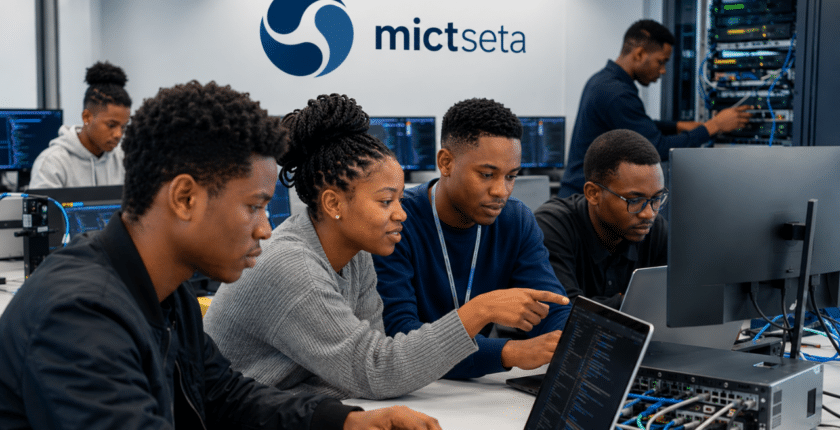
MICT SETA Learnerships in South Africa (2026): Complete Guide to ICT Career Opportunities
Discover everything about MICT SETA Learnerships in South Africa, including qualifications, stipends, funding, application requirements, popular programmes and career opportunities in the ICT sector.
What Is MICT SETA?
The Media, Information and Communication Technologies Sector Education and Training Authority (MICT SETA) is one of South Africa’s official Sector Education and Training Authorities (SETAs) operating under the Department of Higher Education and Training (DHET). Its primary role is to promote skills development, workplace training, learnerships, internships, and occupational qualifications within South Africa’s information and communications economy.
Like all SETAs, MICT SETA helps bridge the gap between education and employment by funding workplace learning opportunities and supporting qualifications that meet industry demands.
For many young South Africans interested in technology and digital careers, MICT SETA serves as a gateway into some of the country’s fastest-growing industries.
To fully understand what a SETA is you can read this article: What is a SETA Full guide.
What Does MICT SETA Cover?
MICT SETA focuses on sectors that drive South Africa’s digital economy.
These include:
- Information Technology (IT)
- Software Development
- Telecommunications
- Electronics
- Broadcasting
- Film and Television
- Animation
- Digital Media
- Advertising Technology
- Cyber Security
- Network Infrastructure
- Data and Business Analysis
As technology continues to transform industries, MICT SETA-funded programmes have become increasingly valuable for job seekers looking to enter future-focused careers.
What Does MICT SETA Do?
MICT SETA supports skills development through several programmes:
Learnerships
Structured workplace learning programmes combining theory and practical experience.
Internships
Workplace exposure opportunities designed for graduates and diploma holders.
Apprenticeships
Practical occupational training leading toward artisan and technical careers.
Skills Programmes
Short courses designed to address specific industry skill shortages.
Bursaries
Financial assistance for selected qualifications and priority skills.
Workplace Training
Partnerships with employers to provide practical experience for learners and graduates.
SETAs are legally mandated to implement sector skills plans, promote workplace learning and support recognised occupational qualifications.
Industries Covered by MICT SETA
| Industry | Examples |
|---|---|
| Information Technology | Software Development, IT Support |
| Telecommunications | Network Operations, Telecom Support |
| Electronics | Electronic Engineering Support |
| Digital Media | Animation, Graphic Design |
| Broadcasting | Television and Radio Production |
| Film Industry | Production and Editing |
| Cyber Security | Information Security |
| Business Technology | Business Analysis and Systems Support |
NQF Levels Covered by MICT SETA
MICT SETA programmes typically span several National Qualifications Framework (NQF) levels.
NQF Level 3
Entry-level occupational qualifications.
NQF Level 4
Equivalent to Grade 12 level qualifications.
NQF Level 5
Higher Certificate level programmes.
NQF Level 6
Diploma-level occupational qualifications.
Most popular MICT SETA learnerships are found between NQF Levels 4 and 5.
Most Popular MICT SETA Learnerships
The following programmes consistently appear among MICT SETA-funded opportunities:
Systems Development Learnership
One of the most sought-after IT learnerships in South Africa.
Skills covered:
- Programming
- Software Development
- Databases
- Web Development
- Testing and Debugging
Technical Support Learnership
Ideal for candidates interested in IT support and troubleshooting.
Skills covered:
- Hardware Support
- Software Troubleshooting
- Help Desk Operations
- Network Fundamentals
- Customer Support
End User Computing Learnership
Designed for individuals entering the ICT environment.
Skills covered:
- Microsoft Office
- Computer Literacy
- Business Systems
- Workplace Technology
Business Analysis Learnership
Focuses on connecting technology and business operations.
Skills covered:
- Requirements Gathering
- Process Analysis
- Project Documentation
- Business Systems
Cyber Security Learnership
One of the fastest-growing specialisations globally.
Skills covered:
- Security Awareness
- Risk Management
- Network Security
- Data Protection
Network Support Learnership
Focused on communication infrastructure and networking.
Skills covered:
- Routers and Switches
- Wireless Technologies
- Network Administration
- Troubleshooting
How Much Is the MICT SETA Stipend?
Many learners want to know how much they can expect to receive while participating in a learnership.
The reality is that MICT SETA does not set one fixed stipend amount.
Instead, stipend levels depend on:
- Employer funding
- Programme type
- Qualification level
- Available grants
- Province and organisation
Typical stipends generally range from:
| Programme Type | Typical Monthly Stipend |
|---|---|
| Entry Learnerships | R3,500 – R5,000 |
| Technical Programmes | R5,000 – R7,000 |
| Advanced ICT Programmes | R7,000 – R8,500+ |
Recent programmes advertised through MICT SETA partners have offered stipends within this range.
Companies That Frequently Offer MICT SETA Opportunities
Several organisations regularly partner with MICT SETA or utilise MICT-accredited qualifications.
Examples include:
- Vodacom
- MTN
- Telkom
- BCX
- Adapt IT
- Dimension Data
- Afrika Tikkun
- Dynamic DNA
- WeThinkCode
- Capaciti
- Synergy Transformation Solutions
These employers often recruit learners for technical and digital roles.
How to Apply for MICT SETA Learnerships
Follow these steps:
Step 1: Obtain Matric
Most programmes require Grade 12.
Step 2: Prepare Your CV
Keep it professional and up to date.
Step 3: Gather Supporting Documents
Prepare:
- Certified ID Copy
- Certified Matric Certificate
- Updated CV
- Qualifications (if applicable)
Step 4: Search for Opportunities
Monitor:
- CareersPursuit
- Employer career portals
- MICT SETA announcements
- Recruitment partners
Step 5: Complete Assessments
Many employers require aptitude tests.
Step 6: Attend Interviews
Shortlisted candidates are invited for interviews.
Step 7: Sign Your Learnership Agreement
Successful applicants will complete official registration documentation before training begins.
How to Verify if a Learnership Is Registered with MICT SETA
This is one of the most important sections for avoiding scams.
Before applying, verify:
Training Provider Accreditation
Confirm that the provider is accredited to offer the qualification.
Qualification Registration
Check whether the qualification is registered on the National Qualifications Framework.
Employer Legitimacy
Verify that the employer is officially registered.
MICT SETA Confirmation
Where necessary, contact MICT SETA directly to verify programme legitimacy.
SAQA Verification
Ensure that the qualification appears on recognised qualification frameworks.
Benefits of MICT SETA Learnerships
Participating in a MICT SETA programme can provide:
- Industry-recognised qualifications
- Workplace experience
- Monthly stipends
- Professional networking opportunities
- Improved employability
- Potential permanent employment opportunities
For many South Africans, these programmes serve as the first step toward a long-term career in technology.
Thabang Maimela’s Tip
If your goal is to enter the technology industry without a university degree, focus on Systems Development, Technical Support, and Cyber Security learnerships. These fields continue to experience strong demand from employers and offer excellent long-term career growth opportunities.
Frequently Asked Questions
What is MICT SETA?
MICT SETA is the Sector Education and Training Authority responsible for skills development within South Africa’s media, information, communications and technology industries.
Does MICT SETA pay stipends?
Yes. Many MICT SETA-funded learnerships provide monthly stipends, although amounts vary by employer and programme.
Can I apply without Matric?
Most programmes require Grade 12, but some entry-level opportunities may have alternative requirements.
How long do MICT SETA learnerships last?
Most programmes run between 12 and 24 months.
Is MICT SETA accredited?
Yes. MICT SETA is one of South Africa’s recognised SETAs operating under the Skills Development Act framework.
Which MICT SETA qualification is most popular?
Systems Development, Technical Support and End User Computing remain among the most popular programmes.
- About the Author
- Latest Posts

I am Thabang Maimela, Founder and Editor of CareersPursuit and YouthSETA, two South African platforms dedicated to helping individuals access employment opportunities, skills development programmes, and career growth resources. Through CareersPursuit, I focus on jobs, internships, apprenticeships, graduate programmes, learnerships, and career advice, while YouthSETA specialises in SETA learnerships, skills programmes, youth development initiatives, and workplace readiness resources. My mission is to make reliable, up to date information more accessible, helping South Africans build skills, improve employability, and navigate their career journeys with confidence. Read more about the author on the About Us page.