
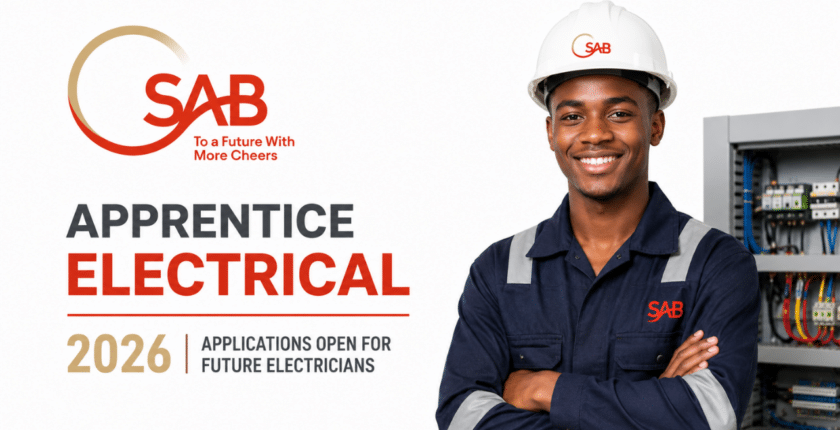
AB InBev Apprentice Electrical 2026

Behind every bottle produced, packaged, and distributed by South African Breweries (SAB) is a complex network of electrical systems working around the clock. From high-speed production lines and automated packaging equipment to industrial motors and control systems, modern manufacturing facilities depend on skilled electricians to keep operations running safely and efficiently.
As industries continue investing in automation and advanced manufacturing technologies, qualified electricians remain among the most sought-after artisans in South Africa. Electrical apprenticeships provide aspiring artisans with an opportunity to gain practical workplace experience while developing the technical skills required to build successful long-term careers.
South African Breweries (SAB) has opened applications for its Electrical Apprenticeship Programme, offering young South Africans an opportunity to receive hands-on training within one of the country’s leading manufacturing environments.
About AB InBev Apprentice Electrical 2026
South African Breweries (SAB) is inviting applications from suitably qualified candidates for its Electrical Apprenticeship Programme.
Successful candidates will have an opportunity to participate in structured artisan training while gaining practical workplace exposure within a world-class manufacturing environment.
The programme is designed to help apprentices develop the technical knowledge, practical skills, and workplace experience required for a successful career as an electrician.
About South African Breweries (SAB)
South African Breweries is one of the most recognised manufacturing companies in South Africa and forms part of the global AB InBev group.
The company operates some of the country’s most advanced production facilities and continues to invest in technology, innovation, sustainability, and skills development.
SAB describes its purpose as:
“We Dream Big to Create a Future With More Cheers.”
The company believes in creating opportunities that allow talented individuals to develop their skills and unlock their full potential.
What Does an Electrical Apprentice Do?
Electrical Apprentices are trained to install, maintain, repair, and troubleshoot electrical systems used within industrial environments.
Throughout the apprenticeship, learners may gain exposure to:
- Electrical maintenance activities
- Industrial electrical installations
- Electrical fault finding
- Motor control systems
- Industrial automation systems
- Electrical safety procedures
- Preventative maintenance programmes
- Electrical testing and inspections
- Equipment commissioning
- Technical troubleshooting
The apprenticeship provides practical experience while helping learners understand how electrical systems support manufacturing operations.
Why Electrical Apprenticeships Are Important
Modern manufacturing facilities rely heavily on electrical infrastructure.
When electrical systems fail, production can stop completely, resulting in significant operational losses.
Qualified electricians help ensure:
- Equipment reliability
- Operational efficiency
- Workplace safety
- Reduced downtime
- Improved productivity
Because of this, electricians remain essential across multiple industries and continue to be among the most valuable artisan trades in South Africa.
What You May Learn During the Programme
Although training activities may vary depending on operational requirements, apprentices may gain exposure to the following areas:
Industrial Electrical Maintenance
Maintaining and repairing electrical equipment used within manufacturing facilities.
Motor Control Systems
Understanding how electrical motors operate and how they are controlled within production environments.
Electrical Fault Finding
Diagnosing and resolving electrical faults that affect equipment performance.
Industrial Automation
Learning how automated systems contribute to modern manufacturing operations.
Preventative Maintenance
Performing inspections and maintenance tasks to prevent equipment failures before they occur.
Electrical Safety
Applying safe working procedures when working with electrical systems and equipment.
Exposure to Advanced Manufacturing Technology
One of the advantages of completing an apprenticeship within a large manufacturing environment is the opportunity to work with advanced industrial systems.
Apprentices may gain exposure to:
- Automated production lines
- Packaging machinery
- Conveyor systems
- Industrial sensors
- Variable speed drives
- Programmable Logic Controllers (PLCs)
- Electrical distribution systems
- Process control equipment
These technologies are widely used throughout manufacturing, mining, logistics, and industrial operations.
Why Electricians Remain in High Demand
Electricians continue to be among the most employable artisans in South Africa.
The demand for qualified electrical professionals extends across industries such as:
- Manufacturing
- Mining
- Construction
- Renewable energy
- Utilities
- Logistics
- Petrochemicals
- Engineering services
As businesses increasingly adopt automation and digital technologies, the need for skilled electricians continues to grow.
Pathway to Becoming a Qualified Electrician
Most electricians begin their careers through apprenticeships and workplace-based training programmes.
A typical progression may include:
- Electrical Apprentice
- Artisan Trainee
- Trade Test Candidate
- Qualified Electrician
- Senior Electrician
- Maintenance Supervisor
- Engineering Foreman
Many apprentices eventually work towards obtaining a nationally recognised trade qualification and Red Seal status.
Understanding the Trade Test and Red Seal Qualification
Electrical apprenticeships form part of South Africa’s artisan development framework.
The journey towards becoming a qualified electrician often involves:
Workplace Training
Practical exposure under the supervision of experienced artisans.
Technical Learning
Completion of relevant electrical theory and technical modules.
Trade Test Preparation
Developing the competencies required to attempt the national trade test.
Red Seal Qualification
Successful candidates may eventually obtain a Red Seal qualification, which is recognised throughout South Africa and can create opportunities both locally and internationally.
Important artisan development bodies include:
- Quality Council for Trades and Occupations (QCTO)
- National Artisan Moderation Body (NAMB)
Skills Required for Success
Successful electrical apprentices often demonstrate:
- Strong problem-solving abilities
- Technical aptitude
- Attention to detail
- Safety awareness
- Communication skills
- Teamwork
- Adaptability
- Willingness to learn
These qualities are essential within both manufacturing and engineering environments.
Why Choose an Electrical Career?
Electrical careers offer strong long-term opportunities because electrical systems exist in almost every industry.
Benefits of becoming an electrician may include:
- High employability
- Valuable technical skills
- Career progression opportunities
- Exposure to advanced technologies
- Opportunities across multiple industries
- Potential for further specialization
For many young South Africans, an electrical apprenticeship serves as the first step towards a rewarding artisan career.
Thabang Maimela’s Tip
Many young people focus only on university qualifications and overlook artisan careers. Yet qualified electricians remain among the most employable technical professionals in South Africa.
What makes electrical apprenticeships particularly valuable is that they combine practical experience with technical learning. Employers consistently look for people who can demonstrate real workplace skills, not just theoretical knowledge.
If you enjoy technology, troubleshooting problems, and understanding how systems work, an electrical apprenticeship can provide a direct pathway into a long-term engineering career. Opportunities with companies like SAB can also expose you to some of the most advanced manufacturing technologies used in South Africa today.
How to Apply
Interested candidates who meet the requirements should submit their applications before the closing date.
Applicants are encouraged to ensure that all supporting documents are complete, accurate, and submitted on time.
Incomplete applications may not be considered.
Explore More Opportunities on CareersPursuit
- Available Apprenticeships across South Africa
- What are Apprenticeships?
- How to apply for Apprenticeships ?
- The difference between Apprenticeships & Engineering Learnerships
Closing Date: Not Specified
Apply Now For The AB InBev Apprentice Electrical
Disclaimer
CareersPursuit shares publicly available opportunities for informational purposes only and is not affiliated with the companies or organisations mentioned unless explicitly stated otherwise. Do not send your personal information, CV, or applications directly to CareersPursuit. Always verify opportunity details through official channels before applying.
- About the Author
- Latest Posts

I am Thabang Maimela, Founder and Editor of CareersPursuit and YouthSETA, two South African platforms dedicated to helping individuals access employment opportunities, skills development programmes, and career growth resources. Through CareersPursuit, I focus on jobs, internships, apprenticeships, graduate programmes, learnerships, and career advice, while YouthSETA specialises in SETA learnerships, skills programmes, youth development initiatives, and workplace readiness resources. My mission is to make reliable, up to date information more accessible, helping South Africans build skills, improve employability, and navigate their career journeys with confidence. Read more about the author on the About Us page.