
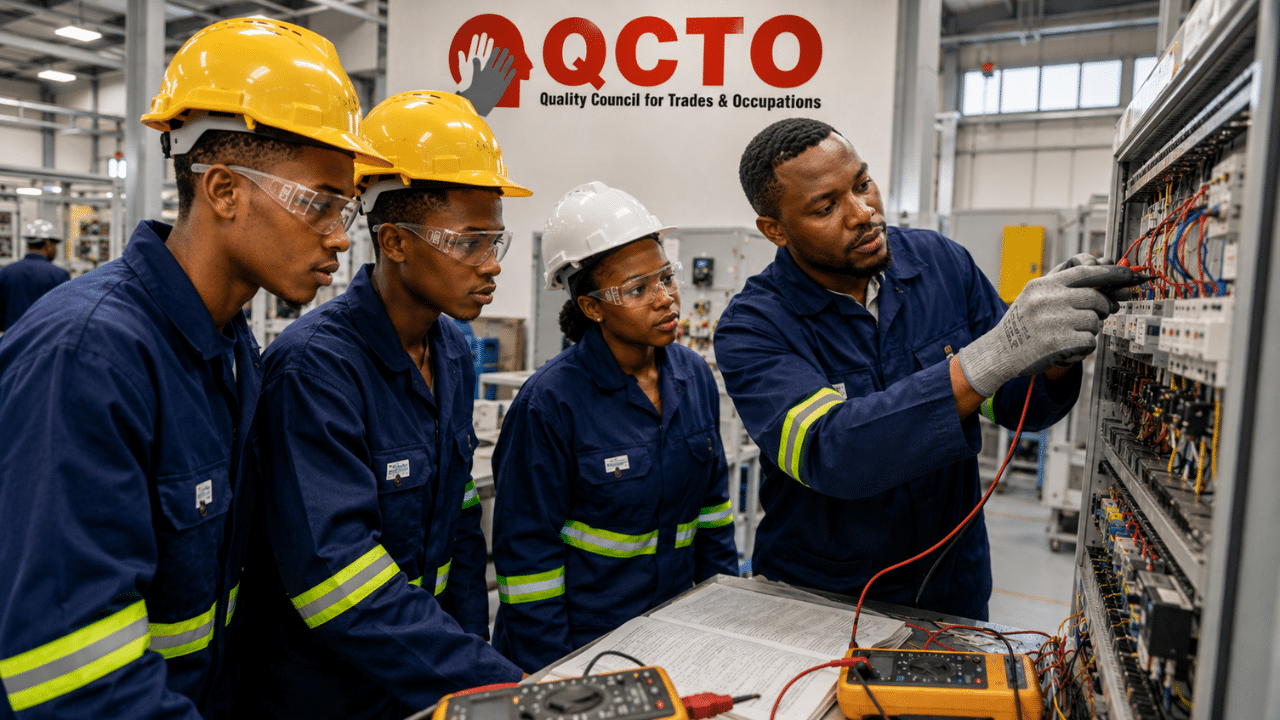
Learn how to become a qualified electrician in South Africa. Discover apprenticeship requirements, N1–N6 studies, trade tests, Red Seal certification, salaries, employers, and career opportunities.
What is an Electrician Apprenticeship?
An Electrician Apprenticeship is a structured training programme that combines classroom-based learning with practical workplace experience to prepare learners for a career as a qualified electrician.
The ultimate goal of every electrician apprenticeship is to qualify for the National Trade Test and earn a Red Seal certification, which is recognised throughout South Africa.
Electricians are responsible for installing, maintaining, testing, diagnosing, and repairing electrical systems used in homes, businesses, factories, power stations, mines, and infrastructure projects.
As South Africa continues investing in energy infrastructure, renewable energy, industrial development, and maintenance of existing electrical networks, qualified electricians remain among the country’s most sought-after artisans.
Learn more about What is an Apprenticeship full guide.
What Does an Electrician Do?
Electricians work with electrical systems that power homes, businesses, industries, and public infrastructure.
Typical duties include:
- Installing electrical wiring
- Testing electrical circuits
- Reading electrical diagrams
- Repairing electrical faults
- Maintaining industrial machinery
- Installing switchgear and control systems
- Troubleshooting electrical equipment
- Ensuring compliance with safety standards
Depending on their specialisation, electricians may work in residential, commercial, industrial, mining, manufacturing, or renewable energy environments.
Types of Electricians in South Africa
Domestic Electrician
Works on residential properties including:
- Houses
- Apartments
- Residential Estates
Common tasks include wiring, lighting installations, and maintenance.
Commercial Electrician
Works on:
- Shopping Centres
- Office Buildings
- Hospitals
- Schools
Commercial electrical systems are often larger and more complex than residential installations.
Industrial Electrician
Industrial electricians work within:
- Factories
- Manufacturing Plants
- Mines
- Processing Facilities
This specialisation typically offers some of the highest earning potential.
Renewable Energy Electrician
One of South Africa’s fastest-growing career paths.
Work includes:
- Solar Installations
- Battery Storage Systems
- Renewable Energy Infrastructure
As load shedding and energy diversification continue, demand for renewable energy electricians is increasing rapidly.
How the Electrician Apprenticeship Path Works
Many learners are surprised to discover that becoming a qualified electrician is a structured journey involving several stages.
The Four Blocks Framework
The electrician apprenticeship pathway typically follows four major stages.
Block 1: Institutional Learning
Training usually begins at a TVET College.
Common qualifications include:
- N1 Electrical Engineering
- N2 Electrical Engineering
- N3 Electrical Engineering
- N4 Electrical Engineering
- N5 Electrical Engineering
- N6 Electrical Engineering
Subjects often include:
- Mathematics
- Engineering Science
- Industrial Electronics
- Electrical Trade Theory
These qualifications provide the theoretical foundation required for the trade.
Block 2: Workplace Learning
After obtaining the required theoretical knowledge, apprentices enter a workplace environment where they gain practical experience.
Workplace learning may occur at:
- Eskom
- Transnet
- Sasol
- Municipalities
- Manufacturing Companies
- Mining Companies
- Private Electrical Contractors
This stage allows apprentices to apply classroom knowledge in real-world environments.
Block 3: Logbook Completion
Throughout the apprenticeship, learners must record practical competencies.
Typical competencies include:
- Cable Installation
- Fault Finding
- Motor Control Systems
- Electrical Testing
- Safety Procedures
The logbook serves as evidence of workplace competence.
Block 4: Trade Test Preparation
Once sufficient workplace experience has been obtained, apprentices prepare for the trade test.
This stage includes:
- Practical Assessments
- Technical Evaluations
- Mock Trade Tests
Successful completion leads to eligibility for the National Trade Test.
Understanding the Red Seal Trade Test
The Red Seal Trade Test is the final assessment that determines whether an apprentice is competent to become a qualified artisan.
Passing the trade test demonstrates that the candidate possesses both the theoretical and practical skills required by industry.
The Red Seal qualification is nationally recognised and significantly improves employability.
The Role of QCTO and NAMB
Two important organisations oversee artisan development.
Quality Council for Trades and Occupations (QCTO)
The QCTO develops and manages occupational qualifications used within South Africa’s artisan training system.
National Artisan Moderation Body (NAMB)
NAMB oversees artisan development and trade testing processes across the country.
These organisations help ensure that electrician qualifications meet national industry standards.
Entry Requirements for an Electrician Apprenticeship
Requirements vary depending on the employer, but most programmes require:
Minimum Requirements
- Grade 12 (Matric)
- Mathematics
- Physical Science
- South African Citizenship
- Medical Fitness
Advantageous Qualifications
- N2 Electrical Engineering
- N3 Electrical Engineering
- Electrical Skills Programmes
- Relevant Workplace Experience
Many employers prioritise candidates who already possess N2 or N3 qualifications.
Major Employers Offering Electrician Apprenticeships
Some of South Africa’s largest employers regularly recruit electrician apprentices.
Examples include:
Eskom
One of the country’s largest producers of electricity.
Transnet
Offers artisan development opportunities across rail, ports, and engineering divisions.
Sasol
A major employer of technical and engineering apprentices.
South32
Frequently recruits engineering apprentices within mining operations.
Anglo American
Offers artisan development opportunities in various mining divisions.
Exxaro
Supports technical skills development through apprenticeship programmes.
ArcelorMittal South Africa
A major industrial employer requiring electrical maintenance professionals.
Municipalities
Many local municipalities offer artisan development programmes linked to electrical infrastructure maintenance.
You can read more about how to apply for apprenticeships.
Electrician Apprenticeship Salaries
During training, apprentices typically receive a monthly stipend or salary.
Amounts vary depending on:
- Employer
- Industry
- Province
- Programme Structure
After qualification, earnings increase significantly.
Typical Career Progression
Apprentice Electrician
↓
Qualified Electrician
↓
Senior Electrician
↓
Electrical Foreman
↓
Electrical Supervisor
↓
Electrical Manager
Electrician Career Opportunities
Qualified electricians can work in:
- Power Generation
- Renewable Energy
- Manufacturing
- Mining
- Construction
- Rail Infrastructure
- Municipal Services
- Property Maintenance
The qualification also provides opportunities to start an independent electrical contracting business.
Scarce Skills Demand
Electricians remain one of South Africa’s most critical scarce skills.
Demand continues to grow due to:
- Infrastructure Development
- Renewable Energy Expansion
- Industrial Automation
- Electrical Maintenance Requirements
This makes the trade one of the strongest long-term career choices for technically minded individuals.
Thabang Maimela’s Tip
Many people focus only on getting accepted into an apprenticeship, but the real goal should be earning your Red Seal. Once you become a qualified electrician, opportunities open across mining, manufacturing, municipalities, renewable energy, and major state-owned enterprises. A Red Seal Electrician remains one of the most respected and employable artisans in South Africa.
Frequently Asked Questions
How long does an electrician apprenticeship take?
Most programmes take between 3 and 4 years depending on the employer and training pathway.
Do I need Matric to become an electrician?
Most employers require Matric, although some programmes may accept alternative technical qualifications.
What is a Red Seal Electrician?
A Red Seal Electrician is a qualified artisan who has successfully passed the National Trade Test.
Which subjects are important?
Mathematics, Physical Science, and Electrical Trade Theory are particularly important.
Is becoming an electrician worth it?
Yes. Electricians remain among the most in-demand artisans in South Africa and enjoy strong long-term career prospects.
Explore More Apprenticeship Guides
- Diesel Mechanic Apprenticeship Guide
- Boilermaker Apprenticeship Guide
- Fitter and Turner Apprenticeship Guide
- Millwright Apprenticeship Guide
- Instrumentation Technician Apprenticeship Guide
- Welder Apprenticeship Guide
- Mechanical Fitter Apprenticeship Guide
- About the Author
- Latest Posts

I am Thabang Maimela, Founder and Editor of CareersPursuit and YouthSETA, two South African platforms dedicated to helping individuals access employment opportunities, skills development programmes, and career growth resources. Through CareersPursuit, I focus on jobs, internships, apprenticeships, graduate programmes, learnerships, and career advice, while YouthSETA specialises in SETA learnerships, skills programmes, youth development initiatives, and workplace readiness resources. My mission is to make reliable, up to date information more accessible, helping South Africans build skills, improve employability, and navigate their career journeys with confidence. Read more about the author on the About Us page.